Bird Word: Casual

Casual: a bird that has been observed outside its normal range.

I am convinced that most bird species do not read the Field Guides. They do not observe where they are supposed to be. They wander off the beaten track. They get lost. Or they decide to have a sea-change or a tree-change.

Whatever.

One thing is certain; many species can be observed from time to time way outside their normal range, where they are usually found. The Striped Honeyeater is a case in point. It is a bird mainly of the inland, in drier woodland scrubs, mallee associations and mulga.

The Striped Honeyeater has visited our garden on a number of occasions. It even nested quite close to our house. This record is the most south westerly occurence of this species. It cannot be classed as resident in this area as it only visits every few years. Its appearance here is classed as “casual.” One has to travel 50 – 100 km NE to observe it in its normal range.

The Spiny Cheeked Honeyeater (shown below) is another bird of the drier parts of Australia.

For more articles in this series check out the Glossary of Bird Words here.

Spiny Cheeked Honeyeater

Spiny Cheeked Honeyeater

Crested Pigeons as pet birds

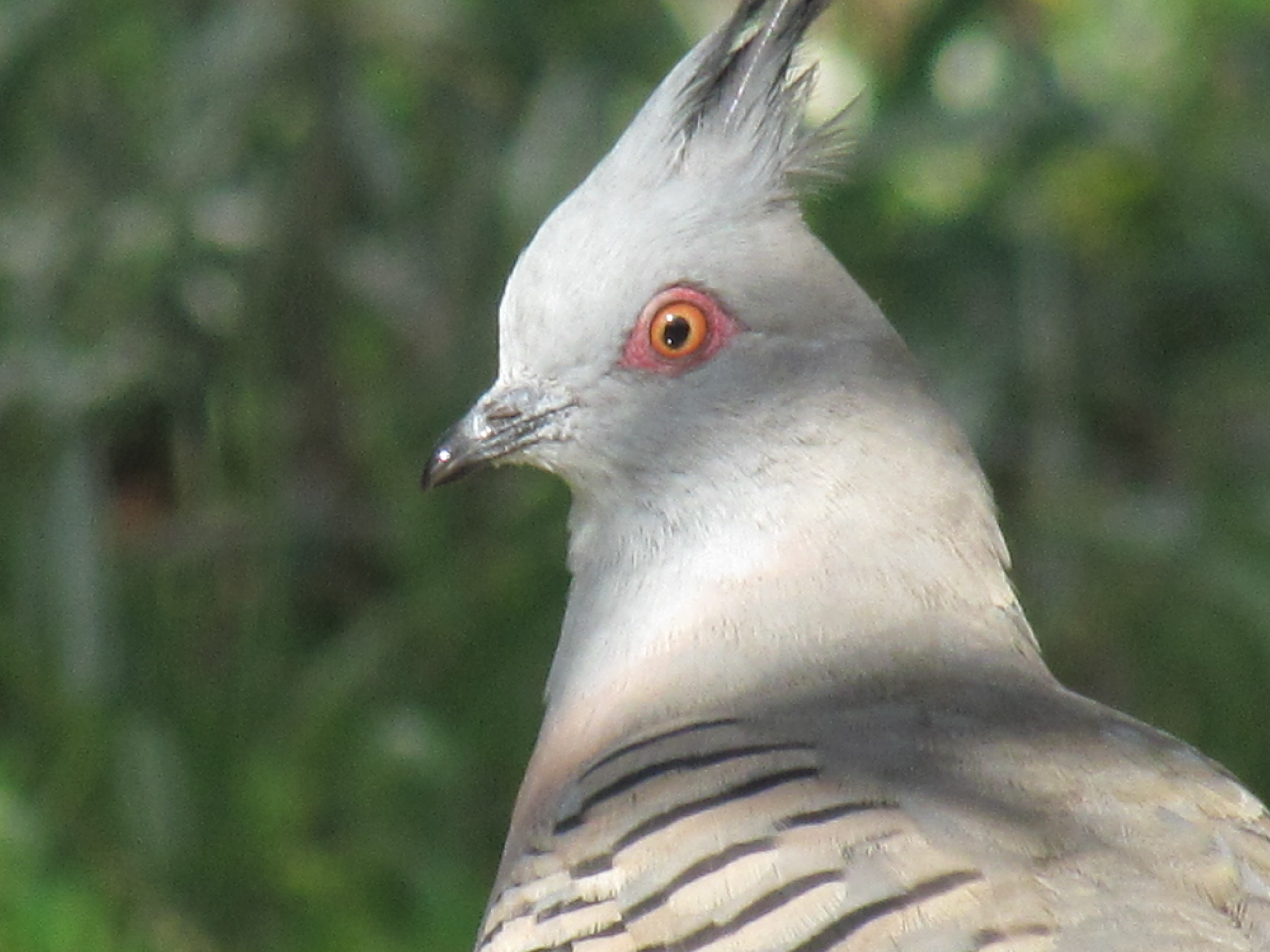
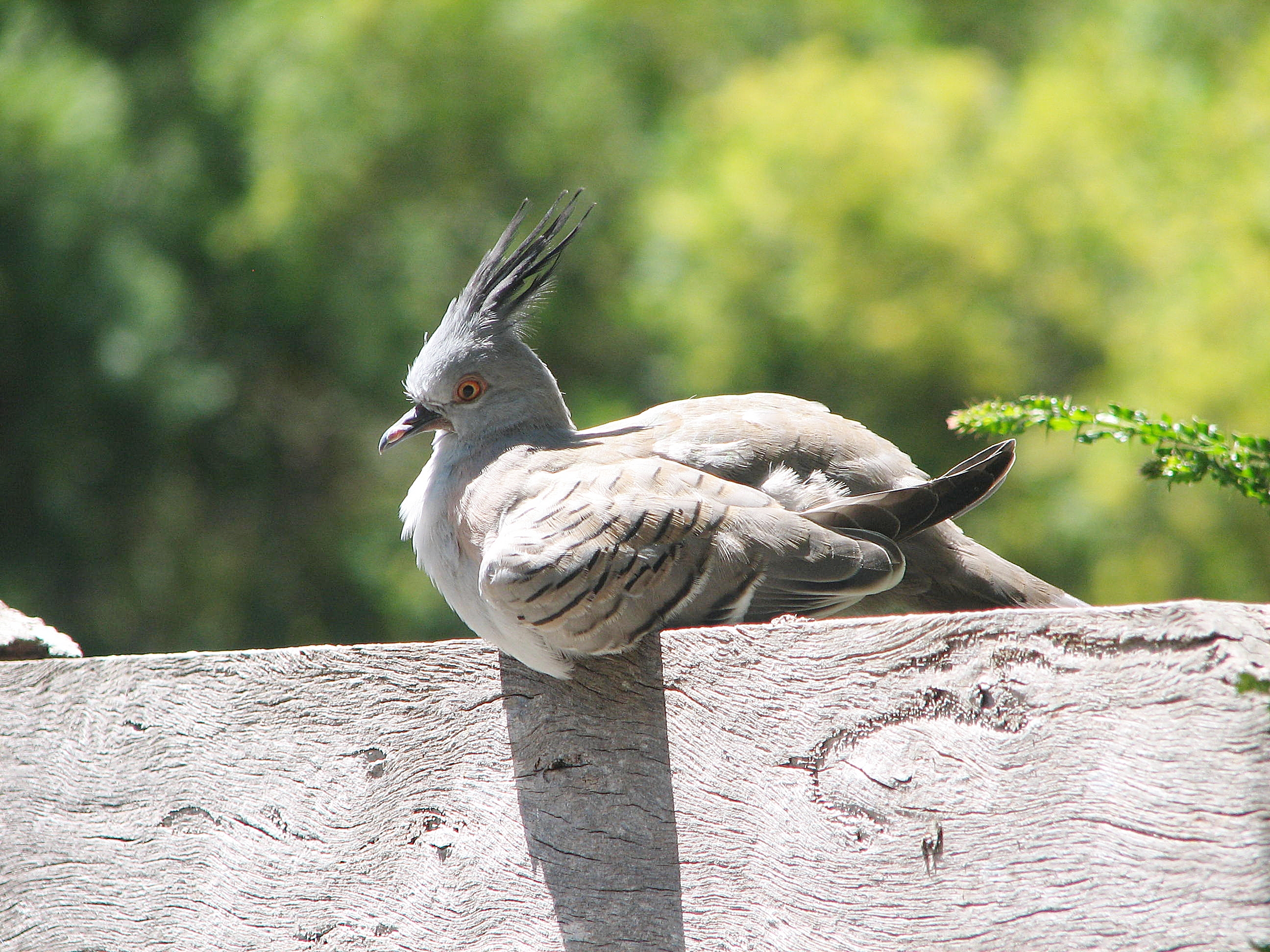
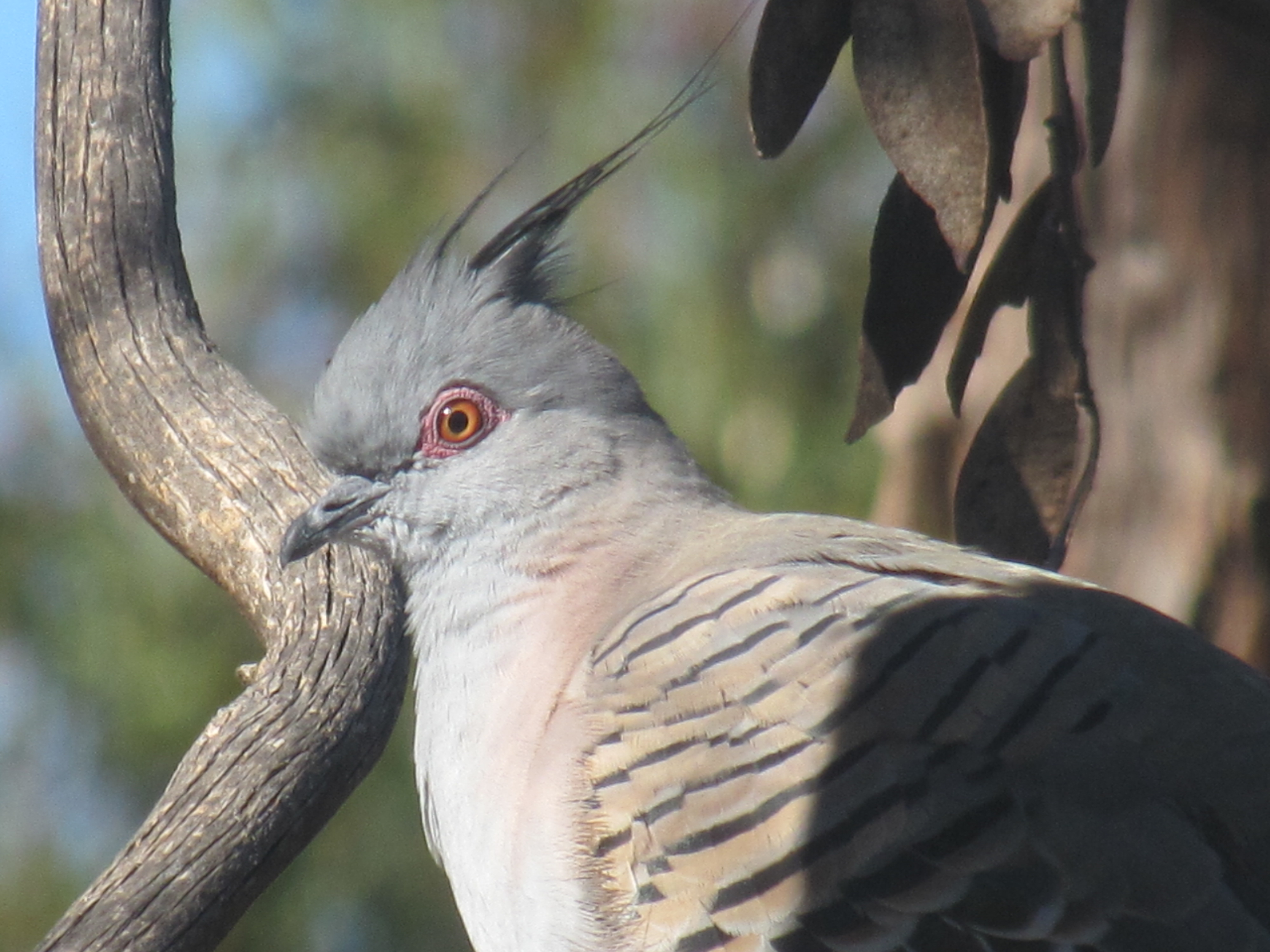
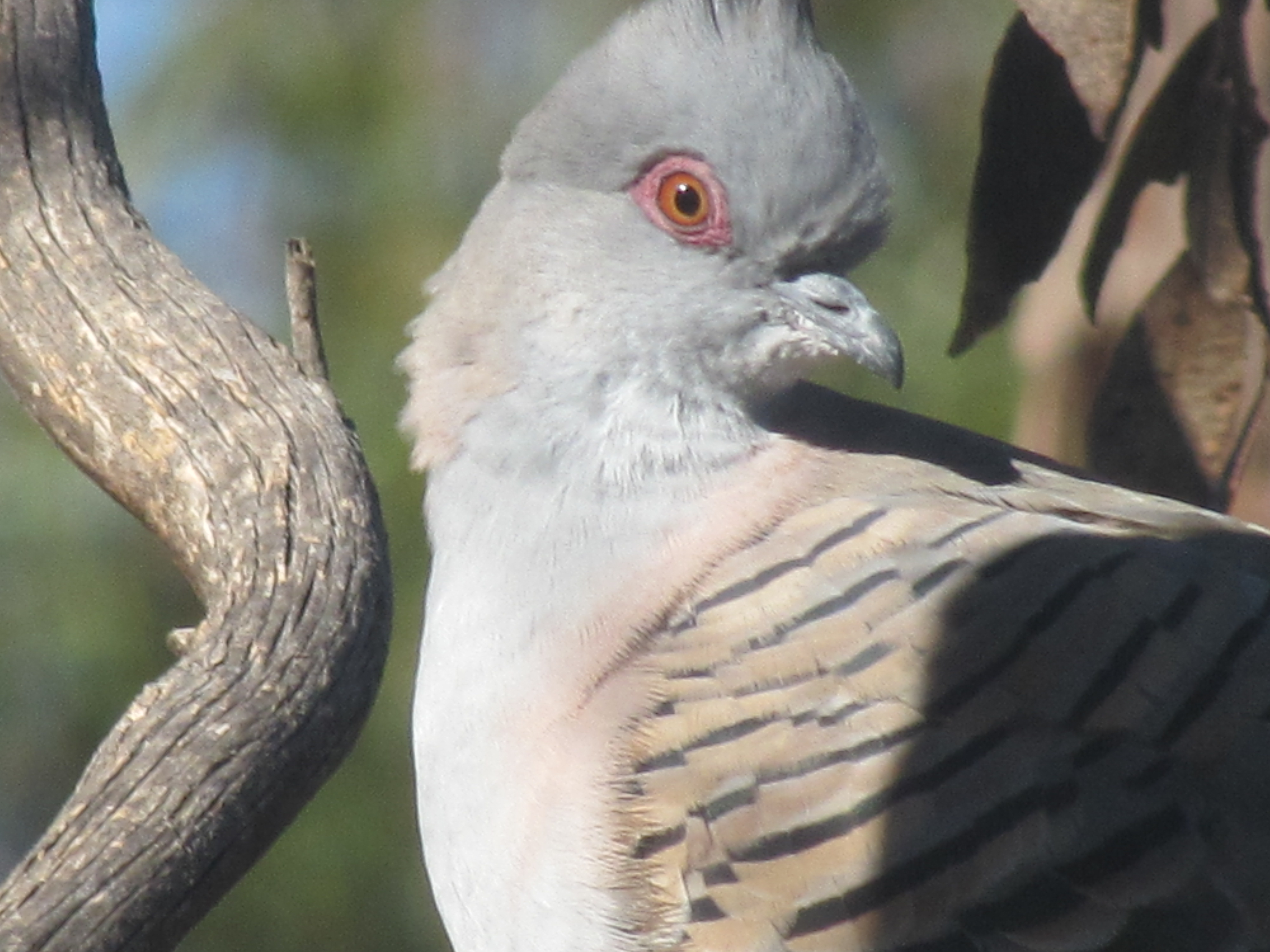
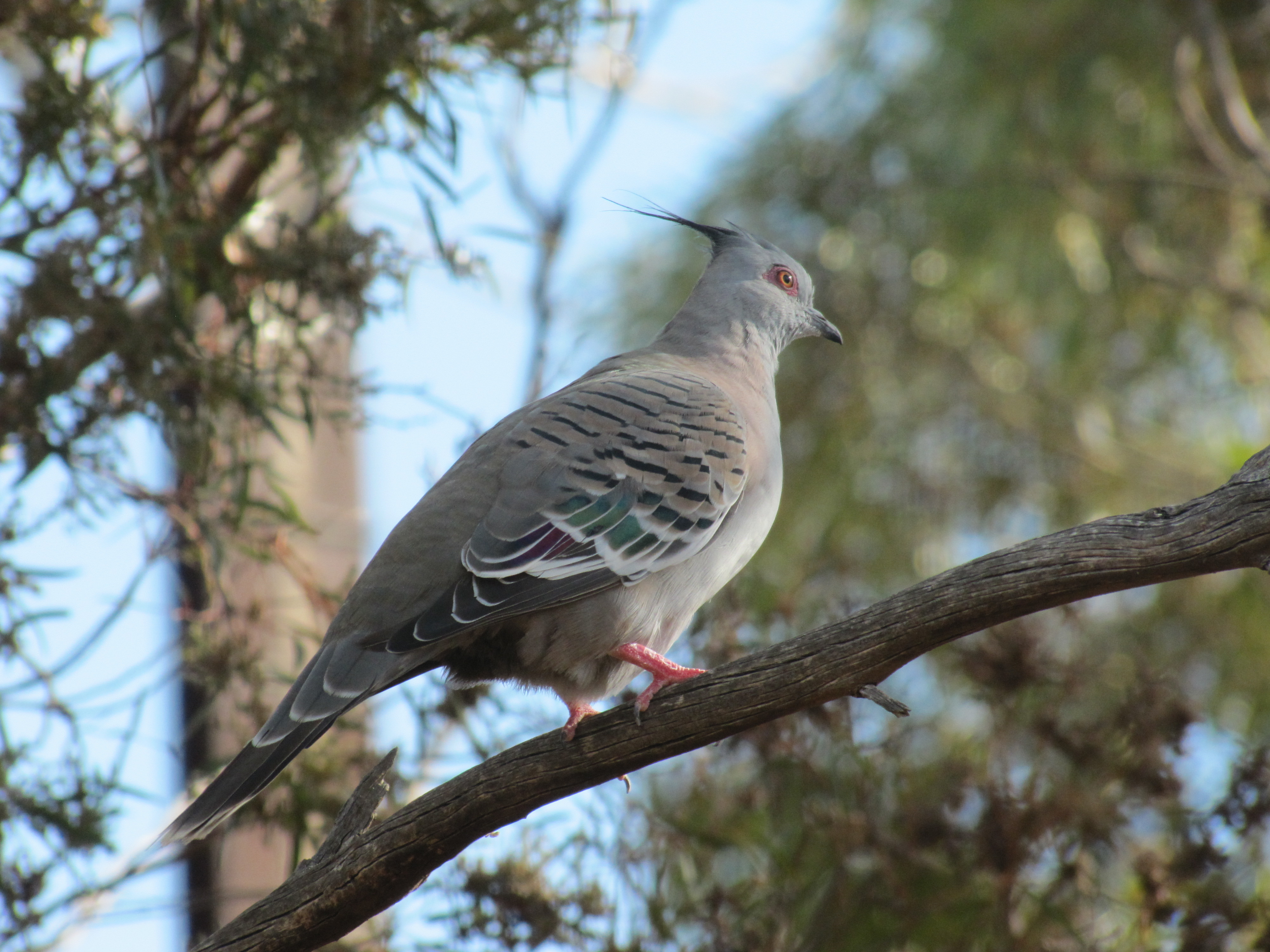
Crested Pigeon

Crested Pigeon

I recently had a rather interesting comment on an earlier post of mine about Crested Pigeons (see Great Birding Moments #5 Crested Pigeons).

Karen wrote:

I have a crested pigeon sitting on my shoulder at the moment. I went for a walk one morning and saw her on the footpath. She ran towards me, not usual pigeon behaviour. I picked her up, she cooed and closed her eyes. I took her home and fed her and she has stayed. She follows me around the house and is the most inquisitive bird I have ever known. She is quite content to be scratched around the head and calls to me whenever I enter the room. She was obviously someone’s pet but I had no success in locating them. I originally had intended to feed her up and let her go again but she is so tame she would have been a danger to herself. She lives with my 3 cockatiels and probably thinks that she is one.

What an amazing experience! Karen is certainly right in deducing that it is someone’s pet, because the behaviour is certainly consistent with a bird that has been used to being handled.

Crested Pigeons are reasonably common in aviculture, especially in zoo collections. This species normally requires a large planted aviary and will breed readily in captivity.

I find it interesting that it is quite at ease in her home and with the Cockatiels. It must make her day very pleasant to have such a lovely team of bird friends to keep her company.

She is probably right that it is safer in her home rather than fending for itself in the wild. If released, it would probably be taken by a hawk very quickly as it would not be as alert to the dangers presented by living life in the wild.

Please note: the laws about keeping native Australian birds in captivity varies from state to state. Please check with the relevant authorities before adopting birds. Your state National Parks and Wildlife website is a good place to start. You local pet shop should also be able to help.

Update: This article was edited and updated in July 2015. The photos below were also added.

Crested pigeon

Crested pigeon

Crested Pigeon_20110328_007

Crested Pigeon

IMG_0793

Crested Pigeon

IMG_5846

Crested Pigeon

IMG_5848

Crested Pigeon

Pigeon, Crested 0344

Crested Pigeon

Crested Pigeon caught by surprise

Crested Pigeons are common birds in our garden and on our five acre block of land. They regularly come to visit the bird bath and have been breeding regularly over the years. We often see 15 to 20 or more sitting in a loose flock on the power lines bordering our property.

Yesterday, while hanging out the washing on the clothes line I observed one very surprised Crested Pigeon. He flew down from a nearby tree, under the clothes already on the line and landed not more than a metre from where I stood. For a brief second he paused, looked at me and then, a little startled, flew back to the tree again.

Crested Pigeon

Crested Pigeon

I enjoy hanging out the washing. It gives me a break from the computer and gets me fresh air. It also gets me out where the birds are, and this I enjoy because over the years I have made some great observations while completing this task. The eyes are naturally looking up and I see things like eagles, kites, hawks, swallows, ibises and many other birds flying overhead. I live in hope of someday seeing some swifts in this way too.

Bird Word: Cap

  • Cap: a patch of colour on the top of the head or the crown of a bird.

Some Australian birds have a distinctive cap on the crown of their head. In some cases this helps greatly in identifying the species, and in others it lends itself to the common name of the bird.

Here are some examples:

  • Red-Capped Robin
  • Red-Capped Plover
  • Plum-Capped Finch (more commonly called the Plum-Headed Finch)

In other cases it is not the word “cap” that is used, but the alternative word “crown.” Here are some examples:

  • Purple-Crowned Lorikeet
  • Chestnut-Crowned Babbler
  • Grey-Crowned Babbler
  • Purple-Crowned Fairy-Wren

Look carefully at the head of the bird you are trying to identify. It can be very useful and even diagnostic.

For more in this series of articles check out the Glossary of Bird Words here.

Red Capped Robin

Red Capped Robin

Birding in the Blue Mountains

We have a growing number of excellent birding web sites in Australia. Many of them show off photos of the wonderful array of birds found in this country. Others are dedicated to regions and the birds of that area.

A new site that has recently appeared is called Birding in the greater Blue Mountains. The Blue Mountains are about an hour’s drive west of Sydney and contain many wonderful birding spots. If you are planning a visit to this region this site would be an excellent starting point in your planning stages.

Link: