Aggressive Bird Behaviour in the Garden
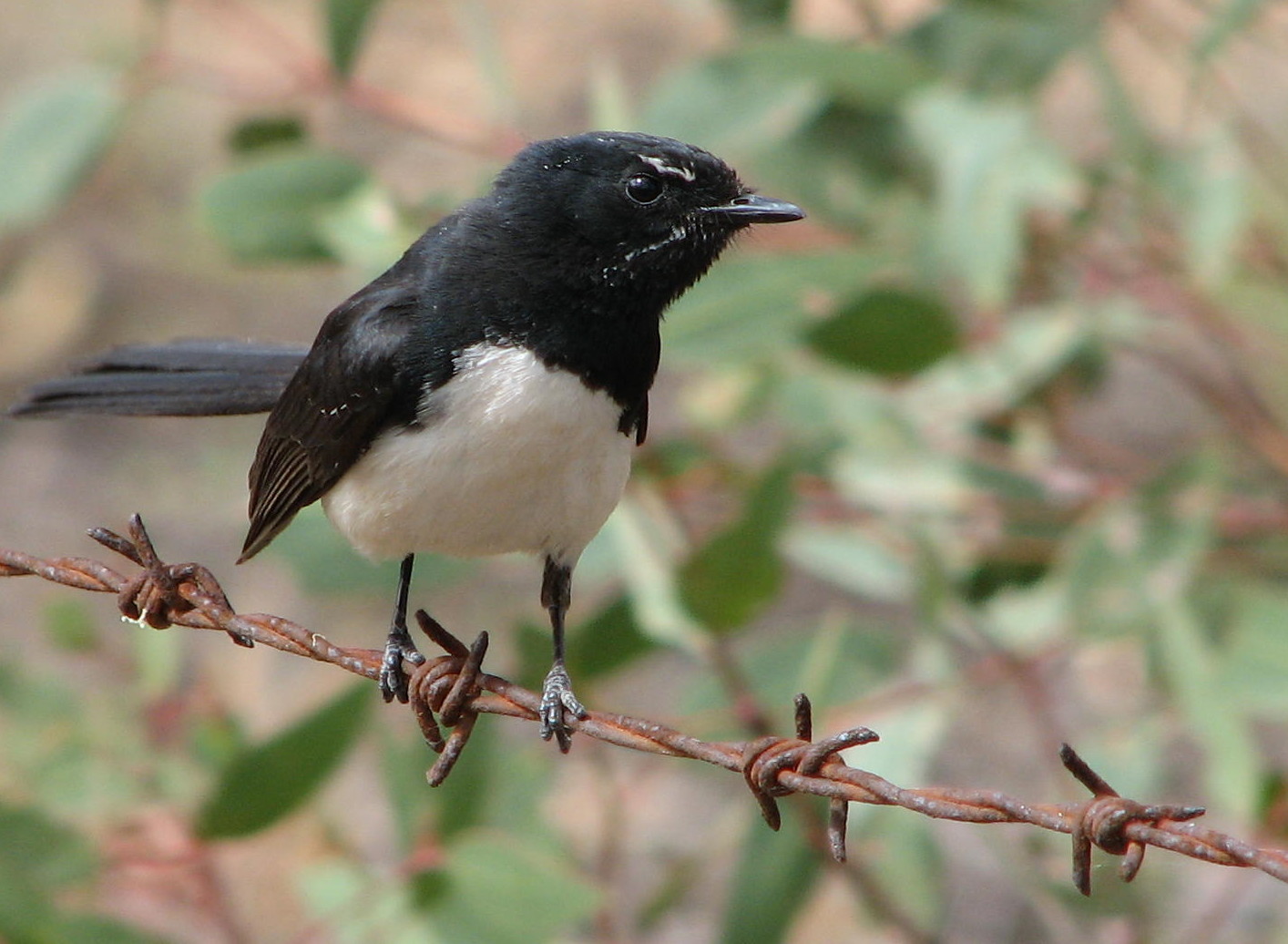
Willie Wagtail
While working in the garden yesterday morning I was suddenly alerted to a noisy confrontation nearby. Our resident Willie Wagtails love to frequent one particular spot where there is an abundance of insects.
Suddenly a New Holland Honeyeater dived in to reap his share of the smorgasbord. The Willie Wagtail became quite aggressive, fanning his tail up high, ruffling the feathers all over and calling in what seemed to me to be in quite an angry – perhaps even distressed – way.
The honeyeater retreated to a nearby tree, only to swoop in repeatedly over the next few minutes. Each time the honeyeater would snap at the Willie Wagtail, zip away a metre or so, grab another insect, and retreat hurriedly to the refuge tree.
These attacks seemed to trigger even more aggression in the Willie Wagtail who decided to front up to the interloper. They then faced each other at about ten paces (bird step size – about 10cm) angrily calling in each others’ face. One last beakful of food and the New Holland Honeyeater decided that other parts of the garden were more attractive anyway, and it flew off. The Willie Wagtail continued to feast contentedly on his little patch.
Further reading:
- Aggressive birds – articles from my archives
This post updated in September 2015.
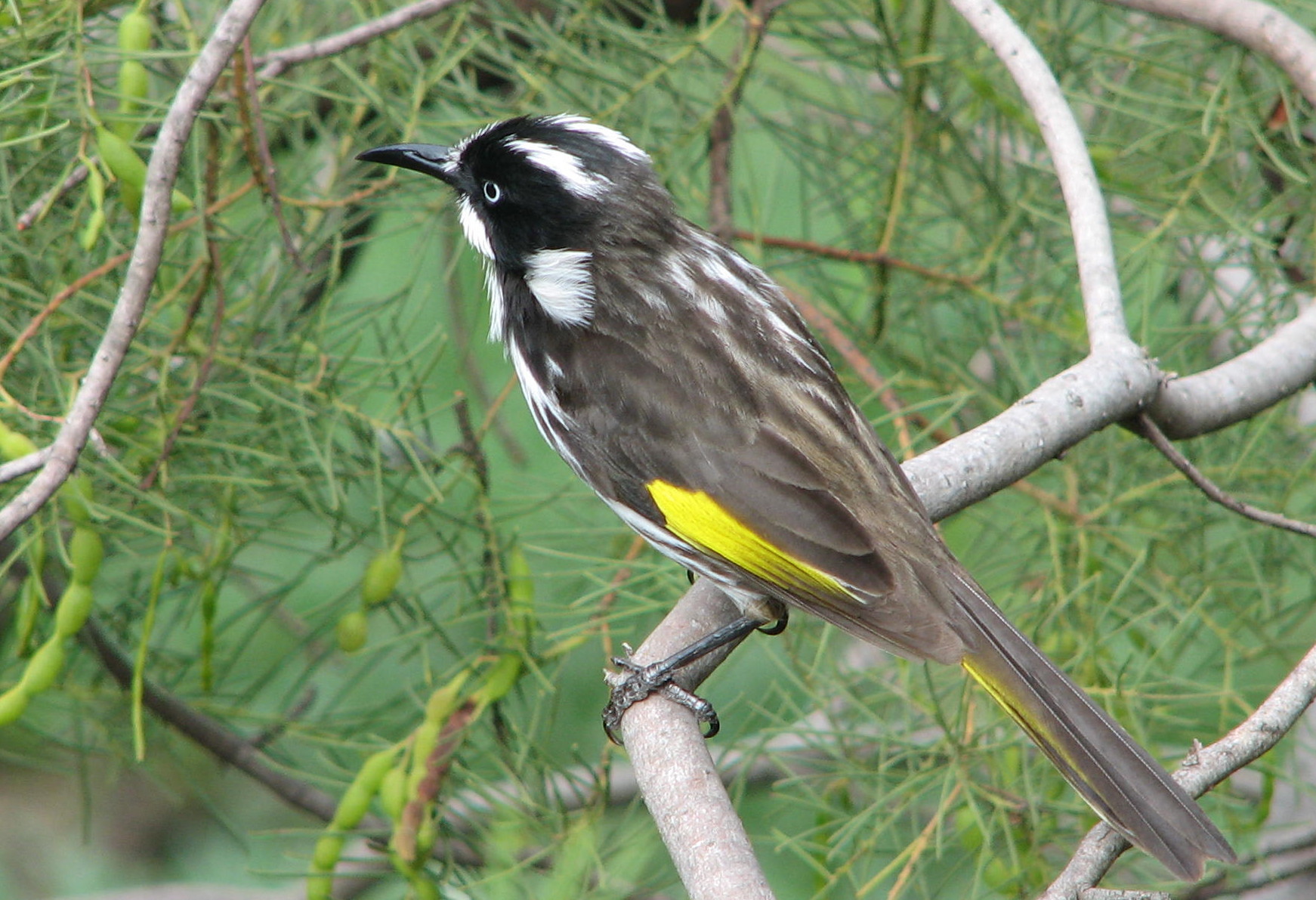
New Holland Honeyeater
White Browed Babblers
One of my favourite birds is the White Browed Babbler Pomatostomus superciliosus. We often have a family group of five to eight visit our garden here in Murray Bridge, South Australia. They are a dullish brown colour with a white throat and a prominent white eyebrow, hence their name. They are widespread in southern Australia and are often found in dry woodlands, scrubs and mallee areas.

White Browed Babbler
Endearing Calls
Their call is quite distinctive and one of the things I like about them. This morning, while I read the paper, I was aware that they had come close to the house for a visit. Their chattering miaowing calls and whistles are hard to miss. They enjoy hopping around the shrubby bushes in our front and side garden. Sometimes the mulch, bark or leaf litter goes flying in all directions as they search for beetles and other tasty morsels for lunch. Then they will fly up into the mallee trees and search for spiders and other creatures under the bark on the branches.
Nesting
Over more than twenty years of living here I have never recorded them breeding on our property. I have seen them feeding young but haven’t actually seen them using a nest with chicks in it. On one occasion, however, we did see them building a nest. This was in a bush only a few metres from our front door, so we were able to keep a close eye on their activities. The whole family went into a flurry of activity gathering sticks from all over the garden. Within a few hours they had almost finished the untidy mess of sticks they called home. That night they settled into the nest and nearby branches. Next morning they all flew off and never used the nest again.
For a lovely photo click here.
Bath time
While we were enjoying our lunch today two Australian Ringneck parrots came to our bird bath. They proceeded to have a very thorough soaking, as the photograph shows.

Australian Ringneck parrots
I guess that they were feeling rather hot. Today is the hottest day we have had since last summer. Spring here in Murray Bridge, South Australia, has been very mild, sometimes even cool with plenty of lovely rain.
Everything is quite ducky
1 Comment »4th September, 2005; Category: Bird Behaviour, Ducks Geese and Swans, Garden birds, Murray Bridge
As I awoke this morning I was aware of quacking noises outside.
Now, although we live in Murray Bridge which is situated on the Murray River, Australia’s longest river, our property is a good five kilometres from the river.
The quacking persisted. Those ducks are here again, I thought. Pacific Black Ducks are common in this area and are not restricted to just the river itself. It is not usual to find them in parks and gardens. Two, sometimes three, are regular visitors to our own garden.

Pacific Black Duck
“Our” ducks have taken a liking to our in-ground swimming pool (affectionately known as “the swamp” – look at the photos and you will know why). Almost daily they visit for a swim or just to laze by the poolside. They don’t seem to mind how frosty it gets here in winter, poolside is the place to be.

Pacific Black Duck with ten ducklings
Last year they slipped a surprise under our radar. Before we knew it, we were the adopted “grandparents” of six ducklings. Sadly, their parents abandoned them. We quickly discovered that raising little ducklings is not a skill one acquires overnight. They were far too weak, cold, wet and hungry when we took over as substitute parents, and they all died, despite our best efforts.
Update: this post was updated on 5th November 2013 with better photos. The mother duck with ten ducklings was taken on another occasion.