Crested Pigeon in the morning sun
No Comments »14th December, 2012; Category: Bush birds, Garden birds, Murray Bridge, Pigeons and Doves
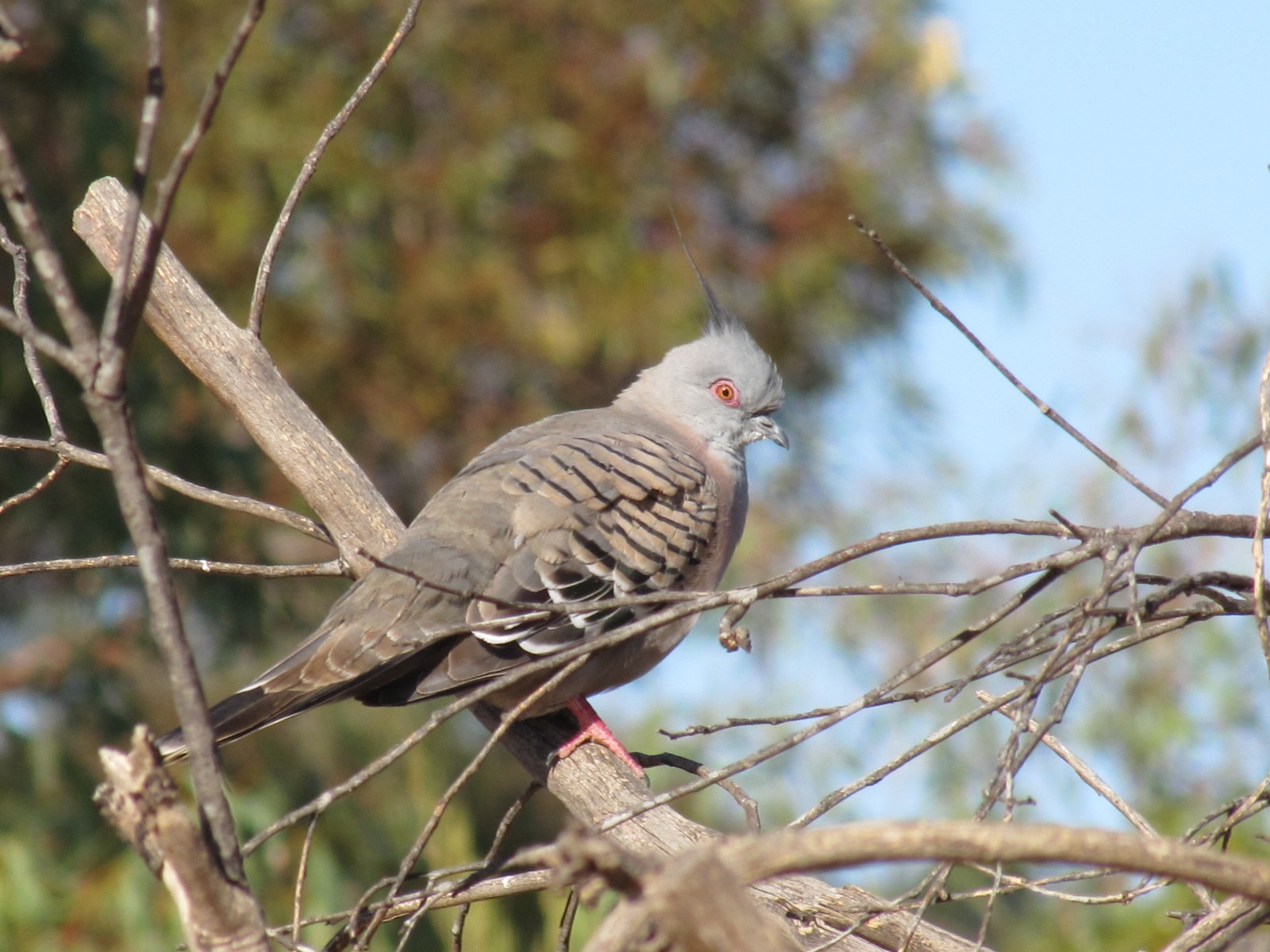
Crested Pigeon
Earlier this week I was out in the garden taking photographs of some young Grey Currawongs being fed by their parents. After getting several good shots I went for a wander of The Estate; we live on a five acre (2 hectare) block. My attention was attracted to this Crested Pigeon perched in the sun on an exposed dead branch of a bush. (Note to self: tidy up that part of the garden and plant something alive.)
Crested Pigeons are very common around Murray Bridge. I have observed loose flocks of 20 – 50 perched on power lines in many parts of the district. They are a resident breeding species on our block of land, and seem to nest most months of the year. (Perhaps that is why they are so common.)
I must say that they are very obliging photographic subjects.
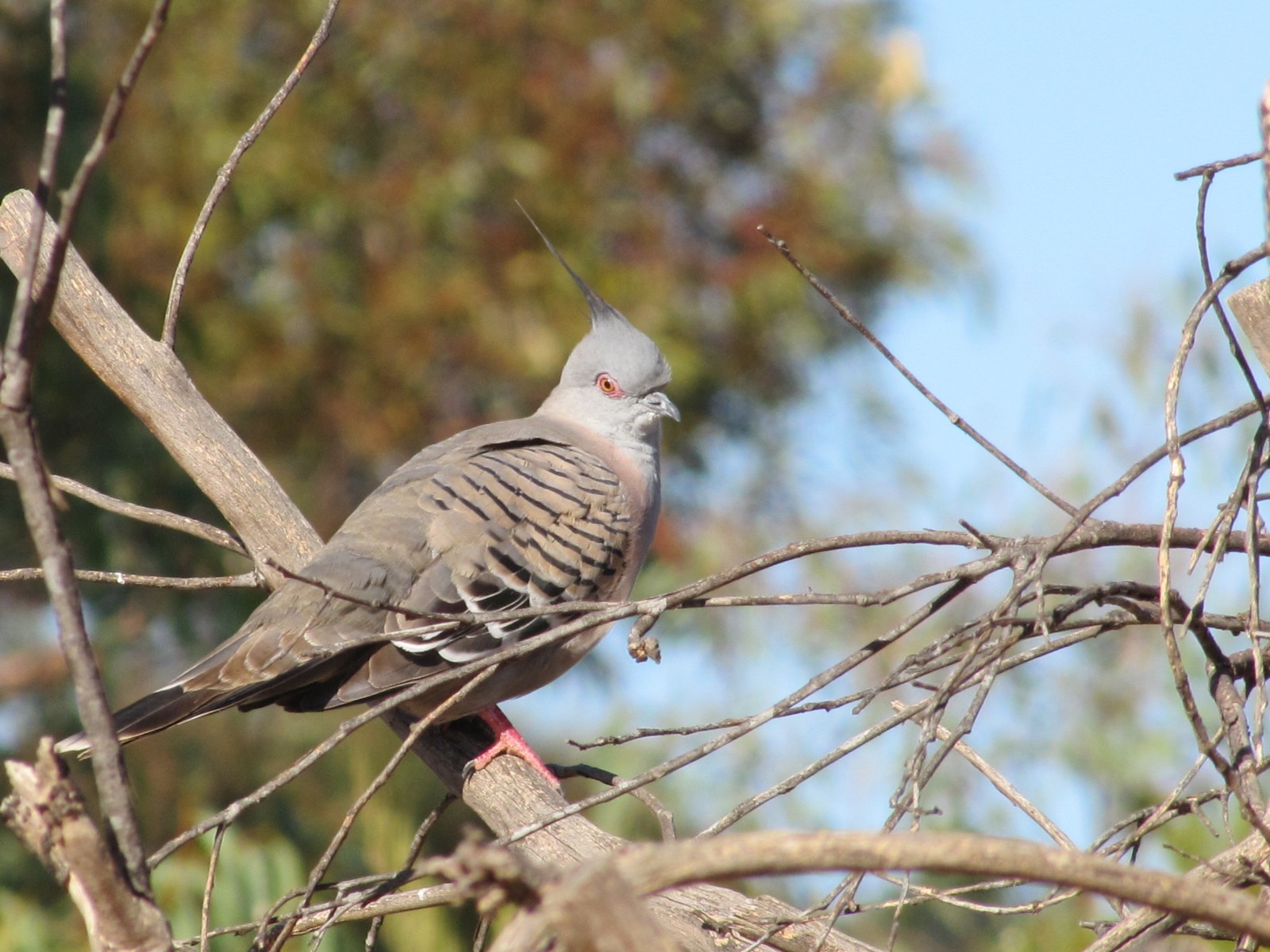
Crested Pigeon
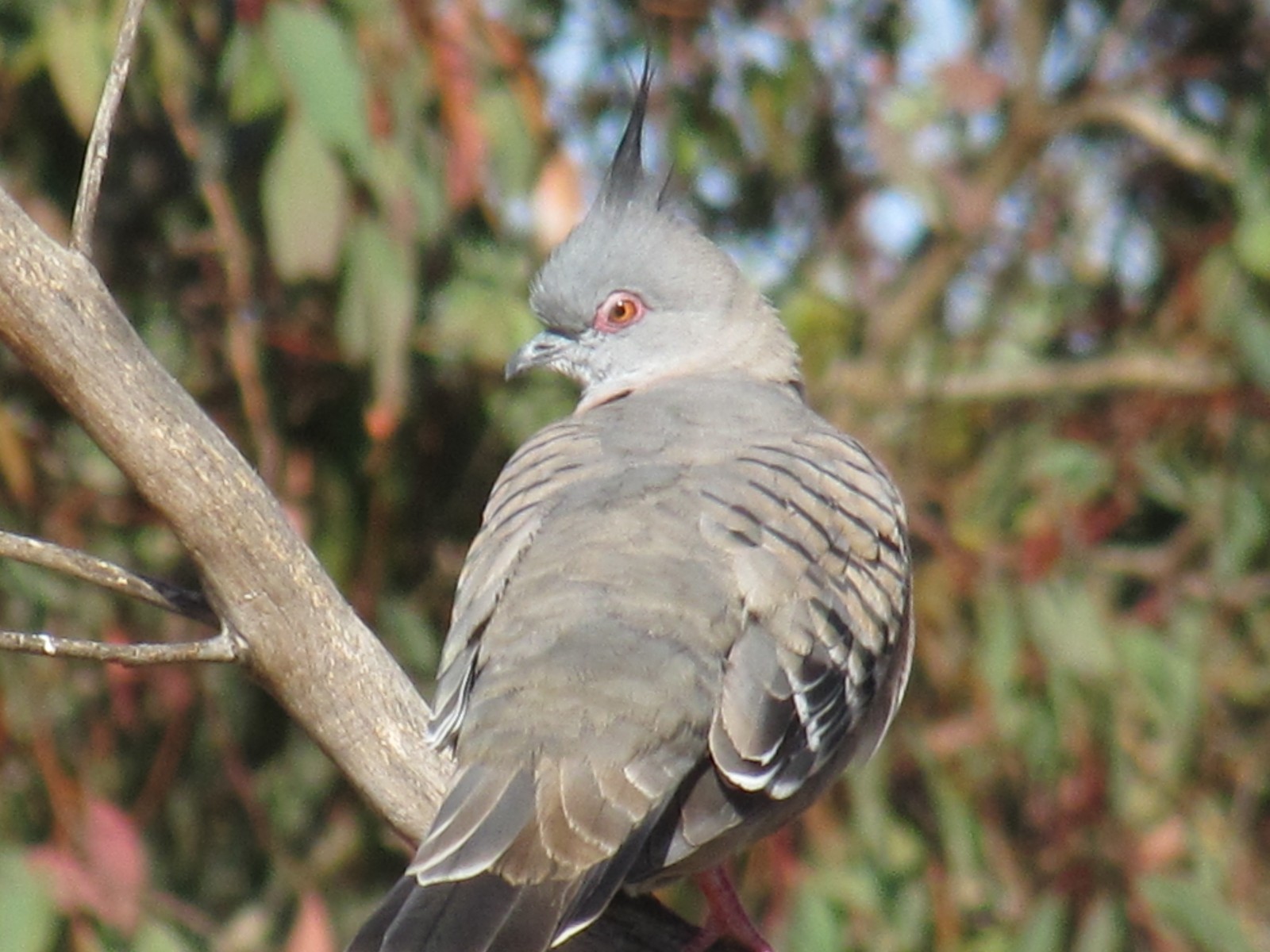
Crested Pigeon

Crested Pigeon
Angry birds in our garden
No Comments »13th December, 2012; Category: Baby birds, Bird Behaviour, Eagles Hawks and Kites, Garden birds, Magpies and Currawongs, Pardalotes

Young Grey Currawong
Last week I wrote about the young Grey Currawongs being fed by the adults in our garden. They are still hanging around and squawking noisily whenever they get hungry – which seems to be most of the time.
Yesterday morning I was doing some reading in our sun room when a sudden screeching noise outside interrupted my thoughts. I grabbed the binoculars (but not the camera, alas) and raced outside. High up in the sky above our house a Little Eagle was soaring around on the gentle breeze, obviously looking for something to eat for lunch.
The eagle seemed oblivious to the fact that both currawong parents were attacking it, screeching loudly in order to chase away the offending predator. Slowly, almost nonchalantly, the eagle glided away out of sight and the currawongs calmed down and resumed feeding the young ones., and peace resumed in the garden.
More angry birds
The currawongs are not the only angry birds resident in our garden. The Australian Magpies chase off the Grey Currawongs and the White-winged choughs, the Willie Wagtails are constantly attacking all three already mentioned and the Red Wattlebirds appear to have a distinct dislike towards anything with wings, including the hapless tiny Pardalotes. This latter conflict is a real miss-matched war: wattlebirds are bout 36cm long compared with the pardalotes weighing in at only 8cm. I reckon the wattlebirds are the big bullies in our little patch.

Spotted Pardalotes

Red Wattlebird
Baby Currawongs in the garden
2 Comments »6th December, 2012; Category: Baby birds, Garden birds, Honeyeaters, Magpies and Currawongs

Young Grey Currawong
I had almost finished dressing this morning when my wife called to me from the kitchen. She had just seen a bird she didn’t recognise fly onto the branch of a tree in our garden. I grabbed the camera and headed out to capture said bird on film – well, digitally, anyway.
It turned out to be a very downy young Grey Currawong waiting patiently for the parents to come feed it. Both parents were hovering in the background waiting for me to move back indoors. Later, from a distance, I saw another young bird being fed in trees a little further distance from the house.
Only a few days ago I was wondering why we hadn’t seen any currawongs in our garden recently. They must have been nesting elsewhere and busy feeding these two large babies. Nice to have them around again, though the smaller birds like the honeyeaters detest them, especially when they still have young in the nest. A baby honeyeater, pardalote or thornbill makes a tasty meal for a fast growing currawong.

Young Grey Currawong
Young Grey Currawong

Grey Currawong
Have the babies flown the nest?

Baby Willie Wagtails just out of their nest
We have a pair of Willie Wagtails who live in our garden. They often come very close to us as we work in the garden, especially when we are weeding or digging the garden beds. They are quite unafraid of us. Every year they build a nest somewhere near the house. Quite often they will even have a second brood of young ones.
This year I noticed them building a nest a few days before we went to Sydney for just over two weeks. I checked on our return and one of the adults was sitting on the nest; I didn’t know if there were eggs or chicks in the nest and didn’t want to disturb the parent bird. Now two weeks later and the nest is empty – in fact, it’s on the ground.
Enough time has elapsed for the eggs to have hatched and the young to have flown. Strange then that we haven’t seen the little ones begging to be fed. I suspect that the nest may have been raided by some form of predator: raven, magpie, currawong, falcon – even a stray cat that has been lurking in the vicinity.
All I can hope is that they decide to nest again – in a more secure location.
King Parrots in Artarmon, Sydney

King Parrot
When we go to Sydney to visit family, we stay with our son and his family in Artarmon, several train station stops north of the Harbour Bridge. This area has many trees lining the streets, many more in gardens and there are several parks in the vicinity. While the birding is not great in terms of numbers of species, the bird life is still quite interesting.
The common species include: Noisy Miners, Australian Magpies, Australian Ravens, Common Mynas, Rainbow Lorikeets, Rock Doves, Laughing Kookaburras, Grey Butcherbirds and Pied Currawongs. From time to time I see Welcome Swallows, Galahs and Sulphur-crested Cockatoos. On one visit we even had a Boobook Owl in a tree in the garden.
More recently, my son – who has just a little more than a passing interest in birds – reported seeing a small group of 4 or 5 King Parrots frequenting his garden, or the street trees nearby. He hasn’t had a chance to get a photo yet, and I didn’t either on our recent visit last month. I did get several good views of them flying around nearby, but no clear views within camera range. Instead, I’ve included today a few photos of this species seen elsewhere.

King Parrot, male and female, Floriade 2007, Canberra