Mallee Ringneck Parrots
Over recent days I’ve been aware of several Mallee Ringneck parrots getting around in our garden. The Mallee Ringneck is one of the sub-species of the Australian Ringneck. I’ve heard them calling quite a deal over recent times and have seen them on a few occasions as the glide their way through the mallee trees in our garden.

Mallee Ringneck Parrot
Breeding
On several occasions we have observed a pair being pursued by two or three juveniles, so they must have bred somewhere nearby. Earlier this week I saw two of them investigate a hollow in one of the old mallee trees near our garage. I have seen them inspecting this potential nesting hollow on other occasions with no result, so I won’t be holding my breath this time either.
Birdbath
Today two Mallee Ringnecks came down to the birdbath while we were having lunch. Even though they have visited the birdbath before – assuming it is the same individuals – they were still very cautious. They both carefully sidled along a nearby branch before settling on the rim of the water container and having a drink. No bathing today and they only stayed long enough for a drink. This meant I was only able to take several photos before they flew off.
UPDATE:
The correct name for our ringnecks is the Australian Ringneck, but there are several distinct sub-species. The one in Western Australia is variously called the Port Lincoln Parrot, Western Ringneck or the Twenty-Eight Parrot (its call sounds like it is saying 28, 28). It has a much darker head than the eastern variations. The main sub-species in S.A., Victoria and N.S.W. is the Mallee Ringneck and there is another variation in Queensland known locally as the Cloncurry Ringneck.
These days they are regarded as one species; the fact that they are able to interbreed naturally with fertile offspring is the determining factor.
It is great to have such a beautiful bird in the garden.
For another article about this species click on this link
http://www.trevorsbirding.com/so-thats-whos-been-eating-my-flowers/
This article updated on 7th October 2015.
Spotted Pardalotes
13 Comments »11th April, 2006; Category: Birds, Garden birds, Honeyeaters, Murray Bridge, Pardalotes
While working in the garden yesterday I was aware of several Spotted Pardalotes (Pardalotus punctatus) in the mallee trees near me. It is always a delight to hear their “pip pip” calls all around us. They are a resident, breeding species in our garden here in Murray Bridge, South Australia. Sometimes their calls are like the squeaking of a rusty gate, so my wife refers to them as the “Squeaky Gate Pardalote.” A subspecies (xanthopygus) is the Yellow Rumped Pardalote. Their rump is a really bright yellow! This subspecies is also present in this area.

Spotted Pardalote with nesting material in beak
Distribution and Breeding
The Spotted Pardalote is found in suitable habitat throughout southern and eastern Australia. These habitats include woodlands, gardens, parks, scrubs, forests and mallee. I have recorded it breeding in our garden, both in a burrow in the sand and in the hollow of a tree. They have also been known to nest in the gaps of brickwork.
Close encounter
One individual I saw yesterday was in the branches just above where I was doing some weeding. He came down closer and closer to me as I made soft kissing noises trying to attract his attention. Eventually he was within a metre of my head – of course I didn’t have my camera with me! Both of us received a sudden jolt when a honeyeater – presumably a New Holland Honeyeater – came rocketing past, snapping its beak at the pardalote who retreated rapidly into the foliage of a nearby tree.
Striated Pardalote
The other species of Pardalote resident in our garden is the Striated Pardalote (Pardalotus striatus).
White Browed Babblers
One of my favourite birds is the White Browed Babbler Pomatostomus superciliosus. We often have a family group of five to eight visit our garden here in Murray Bridge, South Australia. They are a dullish brown colour with a white throat and a prominent white eyebrow, hence their name. They are widespread in southern Australia and are often found in dry woodlands, scrubs and mallee areas.

White Browed Babbler
Endearing Calls
Their call is quite distinctive and one of the things I like about them. This morning, while I read the paper, I was aware that they had come close to the house for a visit. Their chattering miaowing calls and whistles are hard to miss. They enjoy hopping around the shrubby bushes in our front and side garden. Sometimes the mulch, bark or leaf litter goes flying in all directions as they search for beetles and other tasty morsels for lunch. Then they will fly up into the mallee trees and search for spiders and other creatures under the bark on the branches.
Nesting
Over more than twenty years of living here I have never recorded them breeding on our property. I have seen them feeding young but haven’t actually seen them using a nest with chicks in it. On one occasion, however, we did see them building a nest. This was in a bush only a few metres from our front door, so we were able to keep a close eye on their activities. The whole family went into a flurry of activity gathering sticks from all over the garden. Within a few hours they had almost finished the untidy mess of sticks they called home. That night they settled into the nest and nearby branches. Next morning they all flew off and never used the nest again.
For a lovely photo click here.
Going Botanical

Mt Lofty Botanic Gardens
Yesterday my wife and I visited the Mt Lofty Botanic Gardens. These gardens in the Mt Lofty Ranges are part of the Adelaide Botanic Gardens and are about 15-20 minutes drive from the CBD.
It was a glorious day and just right for a walk through this delightful spot in South Australia. It was about 25 degrees Celcius, clear azure blue sky with a gentle cooling breeze just right for the exertion of walking uphill. These gardens are a feature of the eastern slopes of Mt Lofty, the highest point dominating the Adelaide skyline.
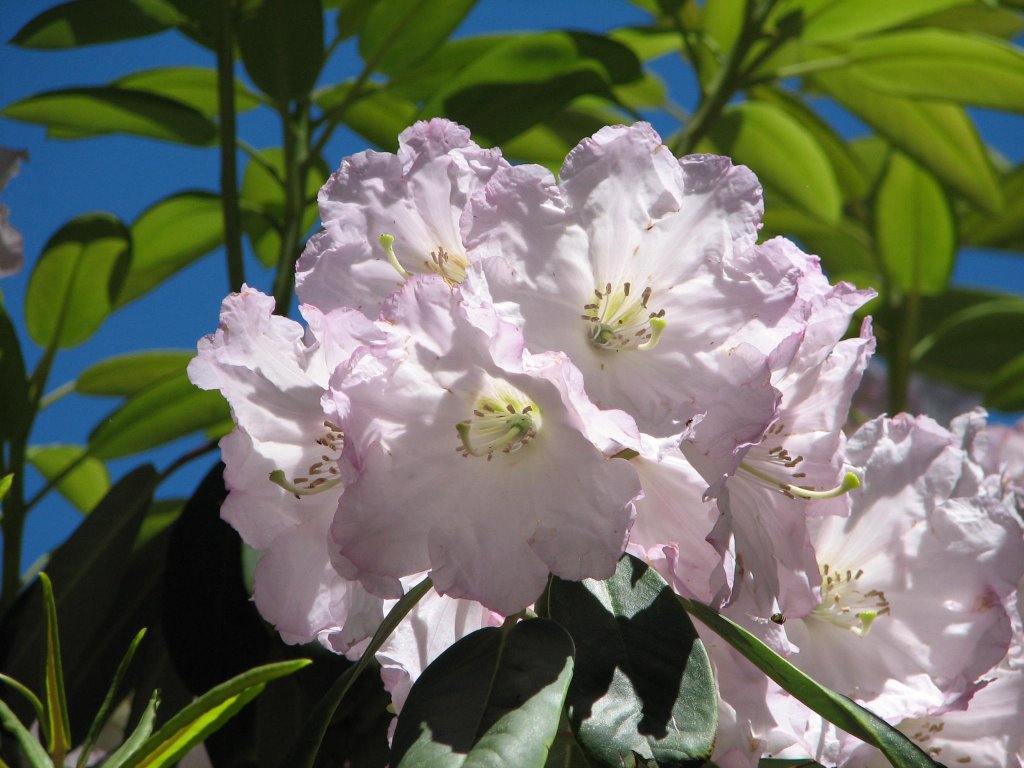
Rhondodendrons
The section we walked through is dominated by extensive planting of Rhondodendrons. These magnificent plants were mostly out in flower and made a dazzling display in the Australian bushland surrounding them.
The forest we walked through was dominated by an introduced bird unfortunately. I love the call of the Common Blackbird, but when it drowns out the calls of our lovely native species it is disappointing. I must have seen and heard over 50 of this species in the hour and a half walk.
Other species included a small flock of Yellow-Tailed Black-Cockatoos, several Grey Fantails, a single Eastern Spinebill and many Crimson Rosella parrots. In the upper section of the park the only bird I managed to photograph was a Grey Currawong, too busy searching for his afternoon snack under the bark of the nearby trees to worry about my camera clicking away.

Grey Currawong
After our walk we drove down to the lower section to have afternoon tea in the lakeside picnic grounds. Here I was able to get many good shots of a Black Swan,

Black Swan
a single Magpie Lark,

Australian Magpie Lark
several Eurasian Coot, Pacific Black Duck and many Wood Ducks.
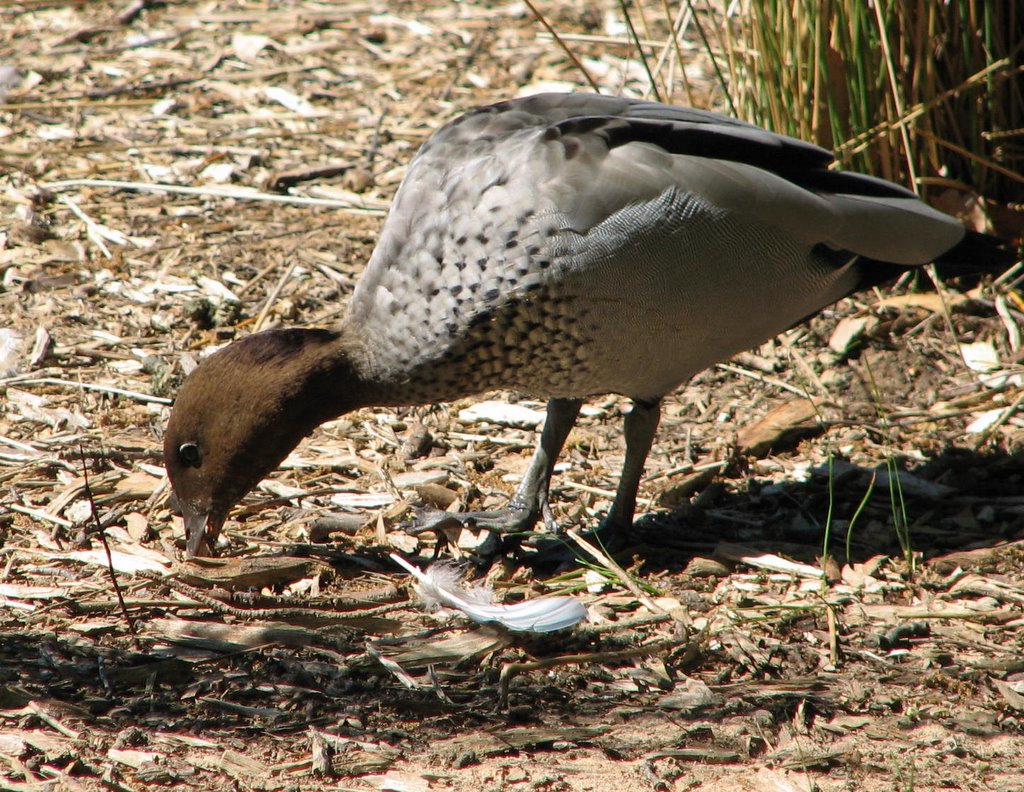
Australian Wood Duck
The Hoary Headed Grebes out in the middle of the lake were too far away to get good photos.
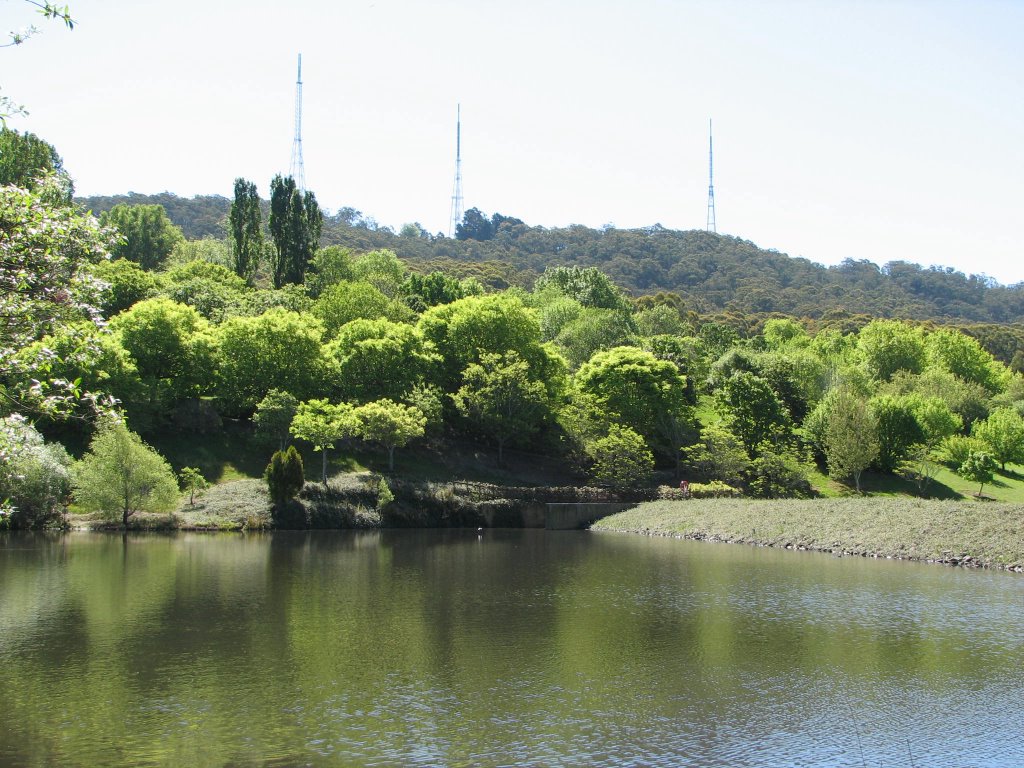
Mt. Lofty Botanic Gardens
Australian Ringneck
Working in the garden this afternoon I needed to stop what I was doing to take some photographs of a local species of parrot, the Australian Ringneck (also called Mallee Ringneck). I did not have to go looking for the bird in question. It was almost like it came looking for me! It flew right up to me in our plant nursery and sat on a nearby branch, not more than 3 metres away.

Of course, the camera was in the house, so I tried to casually walk into the house hoping that the ringneck would stay there. It didn’t but flew to a tree some 50 metres away. I continued working, all the time watching for the bird to return. I didn’t have to wait long. It settled in a tree near the house. I quietly went inside with the camera, planning to use our sun-room as a hide. We have three bird baths about six metres from a large picture window. We have had hundreds of very enjoyable meals watching the parade of birds coming to drink or bathe. Again, a very “good” waste of time, being very relaxing and enjoyable.

Today’s visitor was taking quite a deal of interest in the water. After taking some good photos through the window I decided to go outside and see how close I could get to the ringneck. I was able to get to about 3 metres away while the bird came down to the bird-bath and proceed to have a very thorough bath. I managed to get several more excellent photos. I then pressed the video button on the camera and filmed the bird washing and preening for about two minutes. I haven’t yet worked out whether I can make this video available on this blog.
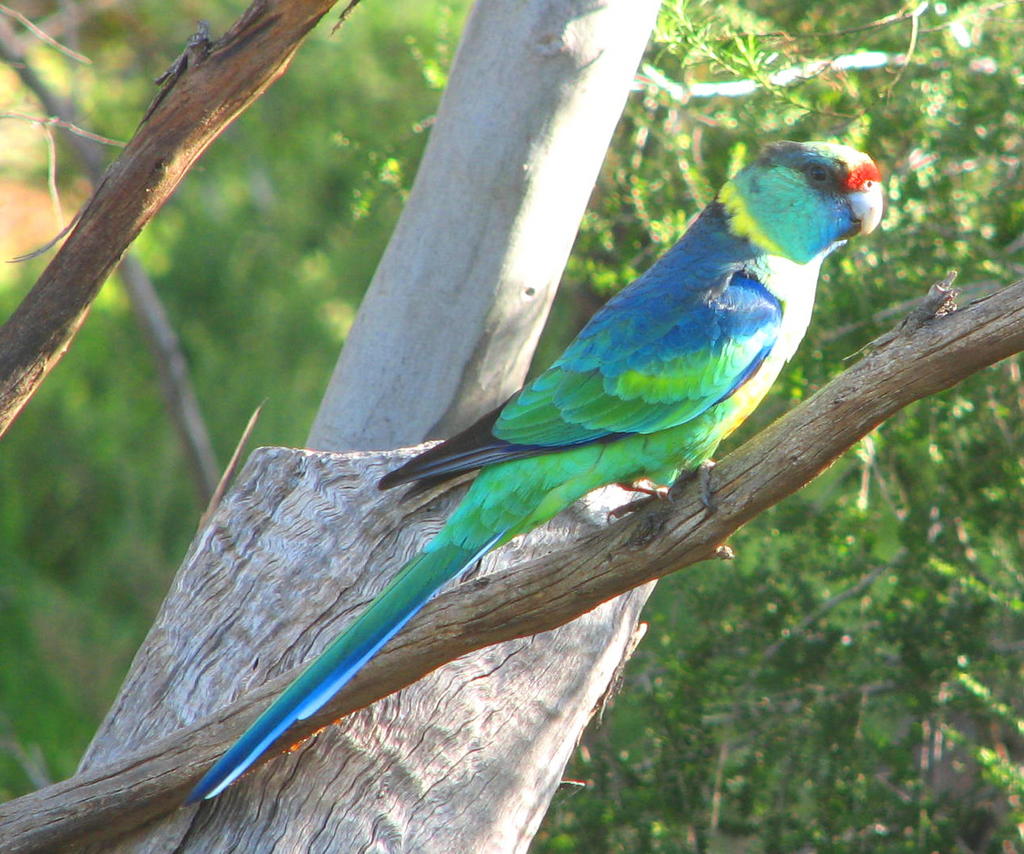
Usually we have only two Australian Ringnecks around in the garden. In recent months there have been four, two of them juveniles. They aren’t in our garden constantly but rather roam over a wide range of the local environment. We usually love seeing them near to the house like today. When they decide to raid the orchard and nip the buds off the pear and apple trees we get just a tad annoyed – no – angry. We also get no fruit! Today I observed only one bird; I wonder if the other is nesting somewhere?