Crested Pigeons as pet birds
239 Comments »16th November, 2006; Category: Aviaries, Bird Behaviour, Caring for birds, Great Birding Moments, Pigeons and Doves

Crested Pigeon
I recently had a rather interesting comment on an earlier post of mine about Crested Pigeons (see Great Birding Moments #5 Crested Pigeons).
Karen wrote:
I have a crested pigeon sitting on my shoulder at the moment. I went for a walk one morning and saw her on the footpath. She ran towards me, not usual pigeon behaviour. I picked her up, she cooed and closed her eyes. I took her home and fed her and she has stayed. She follows me around the house and is the most inquisitive bird I have ever known. She is quite content to be scratched around the head and calls to me whenever I enter the room. She was obviously someone’s pet but I had no success in locating them. I originally had intended to feed her up and let her go again but she is so tame she would have been a danger to herself. She lives with my 3 cockatiels and probably thinks that she is one.
What an amazing experience! Karen is certainly right in deducing that it is someone’s pet, because the behaviour is certainly consistent with a bird that has been used to being handled.
Crested Pigeons are reasonably common in aviculture, especially in zoo collections. This species normally requires a large planted aviary and will breed readily in captivity.
I find it interesting that it is quite at ease in her home and with the Cockatiels. It must make her day very pleasant to have such a lovely team of bird friends to keep her company.
She is probably right that it is safer in her home rather than fending for itself in the wild. If released, it would probably be taken by a hawk very quickly as it would not be as alert to the dangers presented by living life in the wild.
Please note: the laws about keeping native Australian birds in captivity varies from state to state. Please check with the relevant authorities before adopting birds. Your state National Parks and Wildlife website is a good place to start. You local pet shop should also be able to help.
Update: This article was edited and updated in July 2015. The photos below were also added.
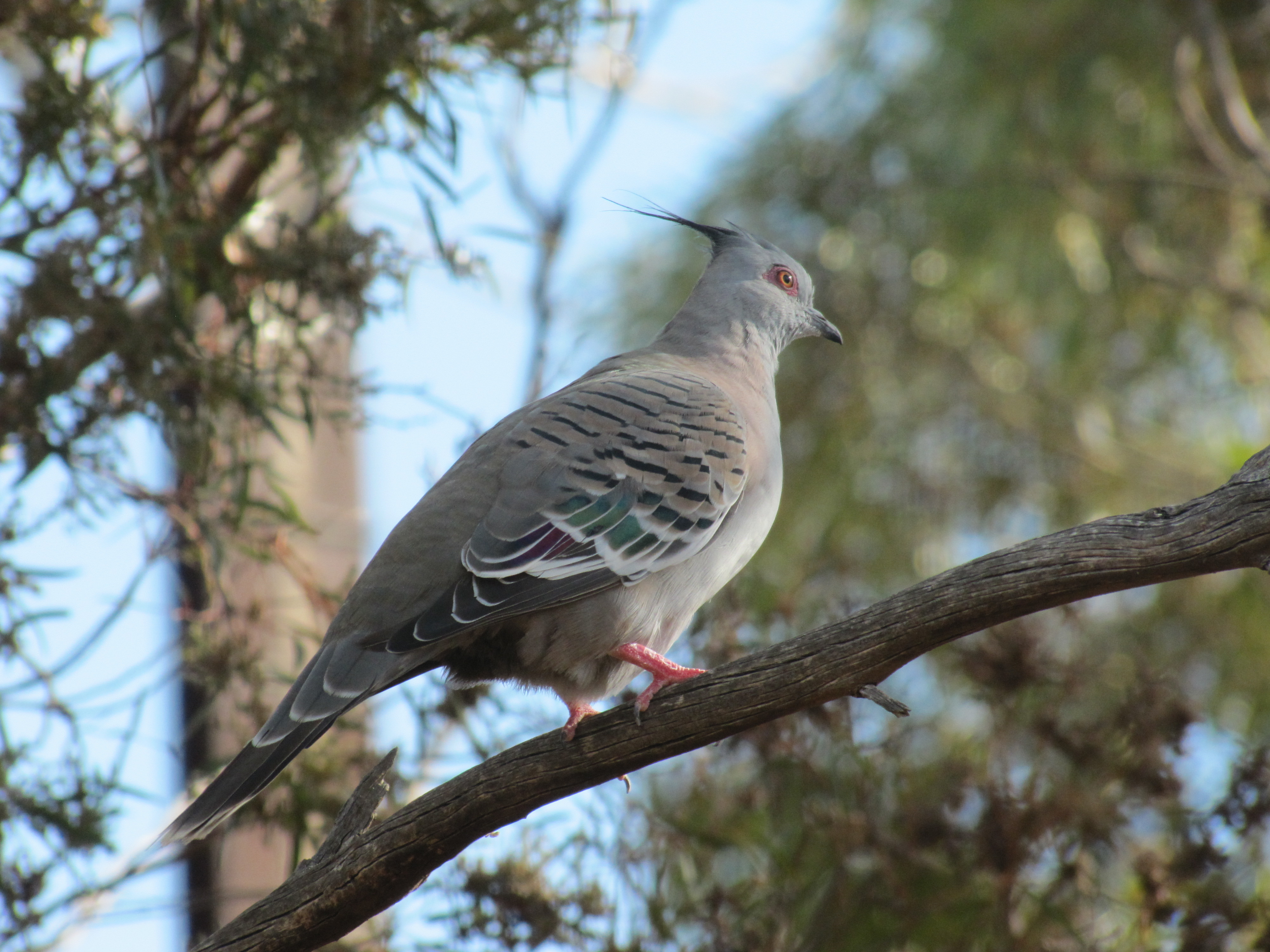
Crested pigeon
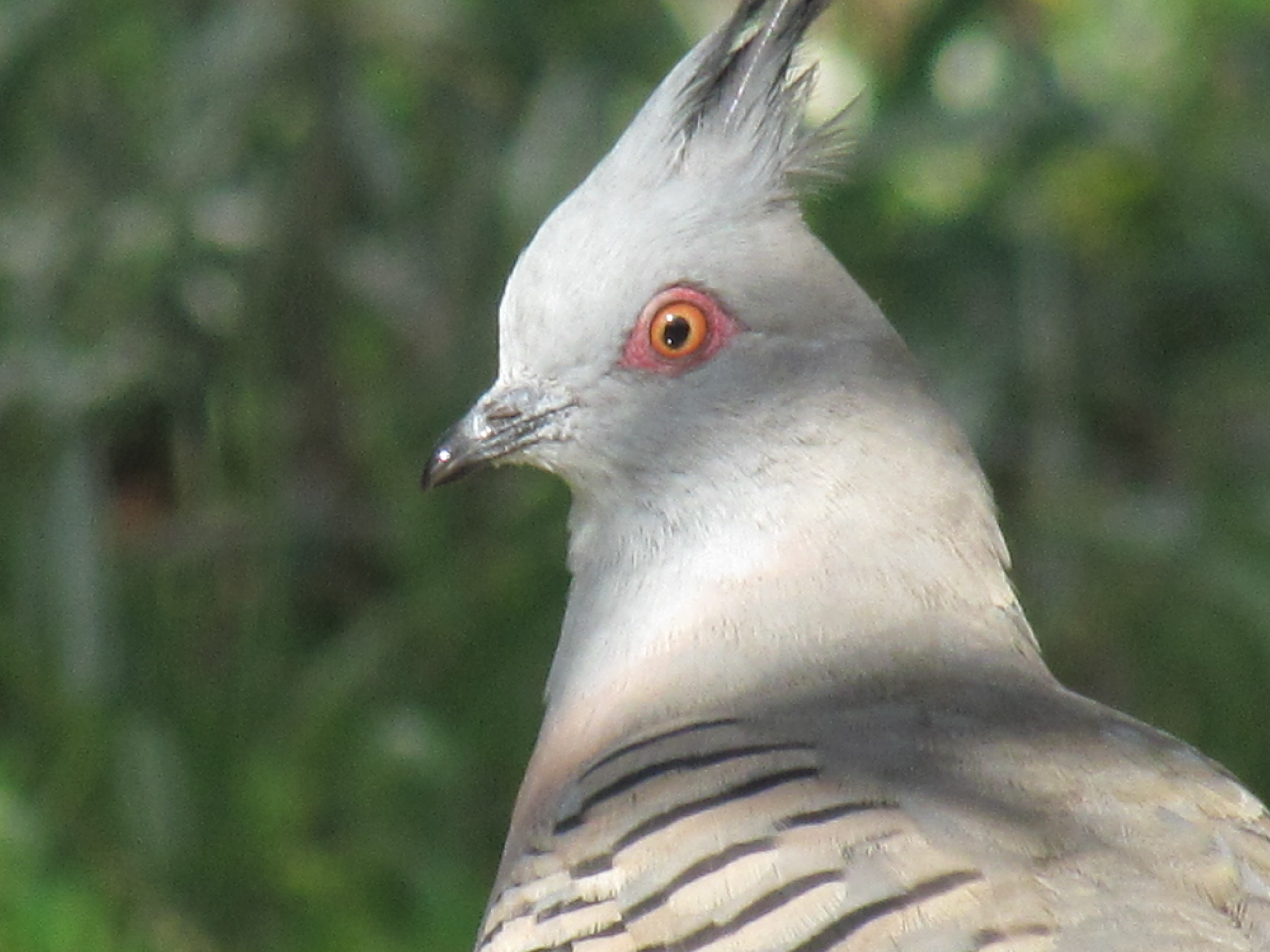
Crested Pigeon
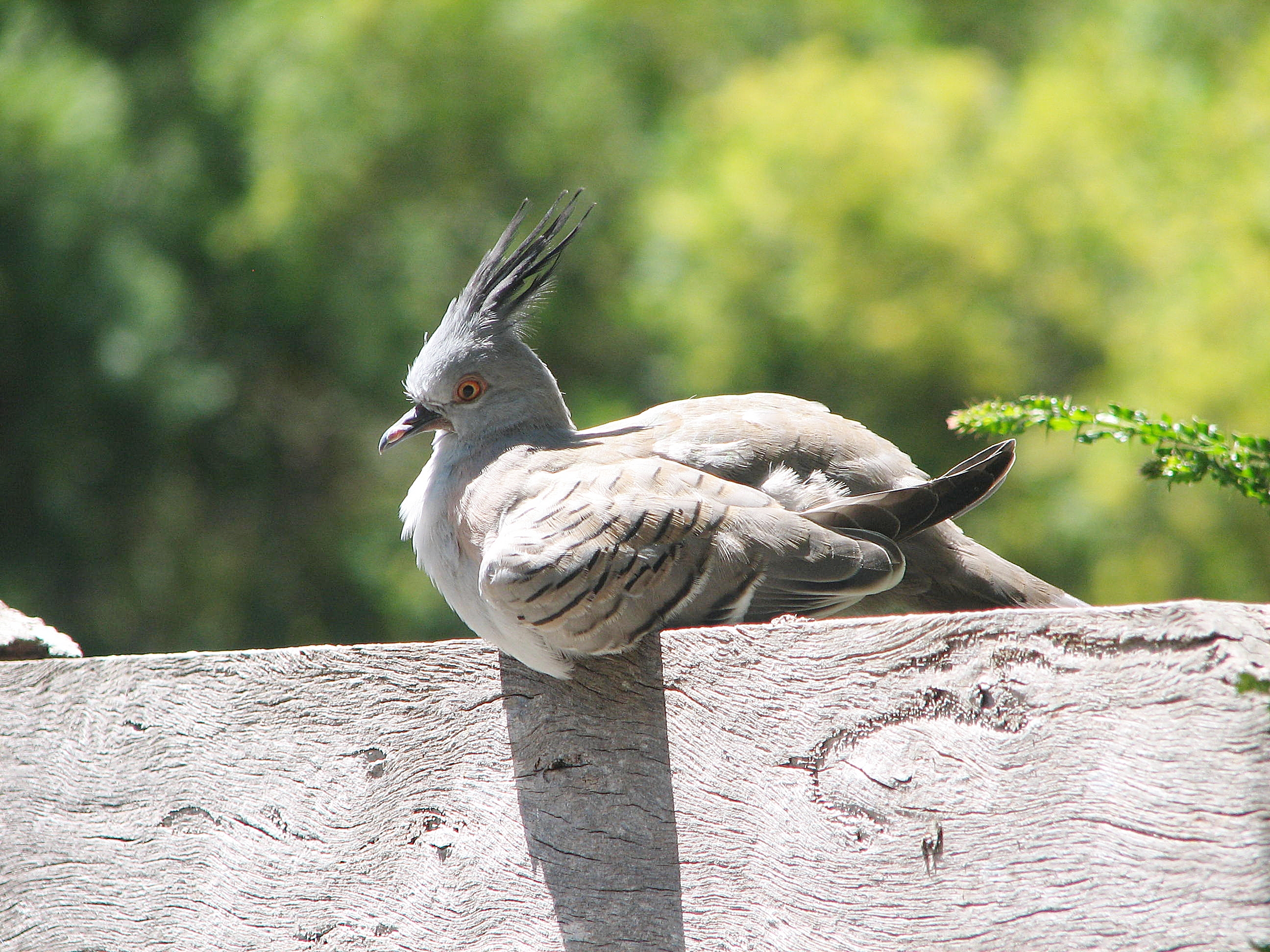
Crested Pigeon
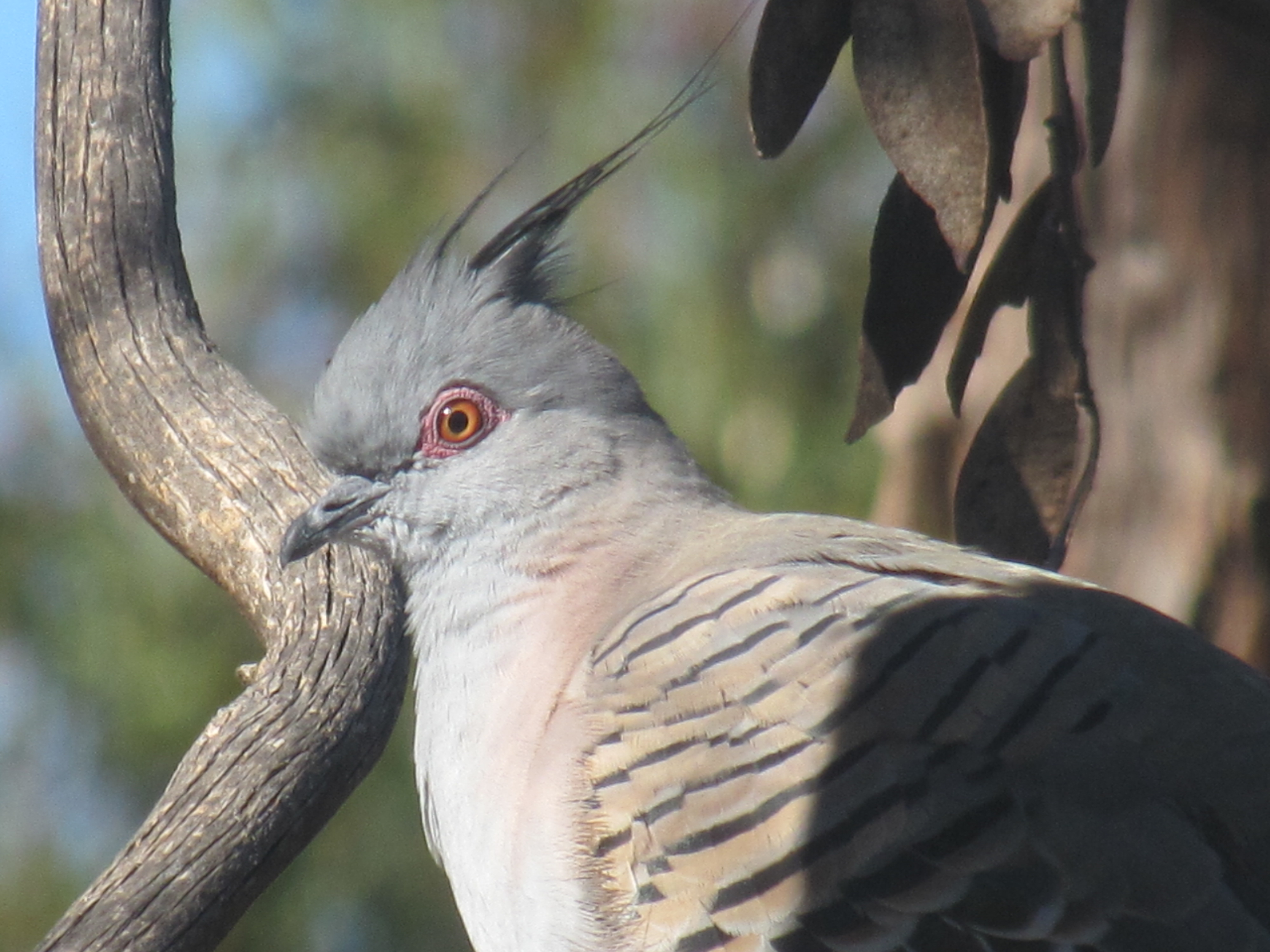
Crested Pigeon
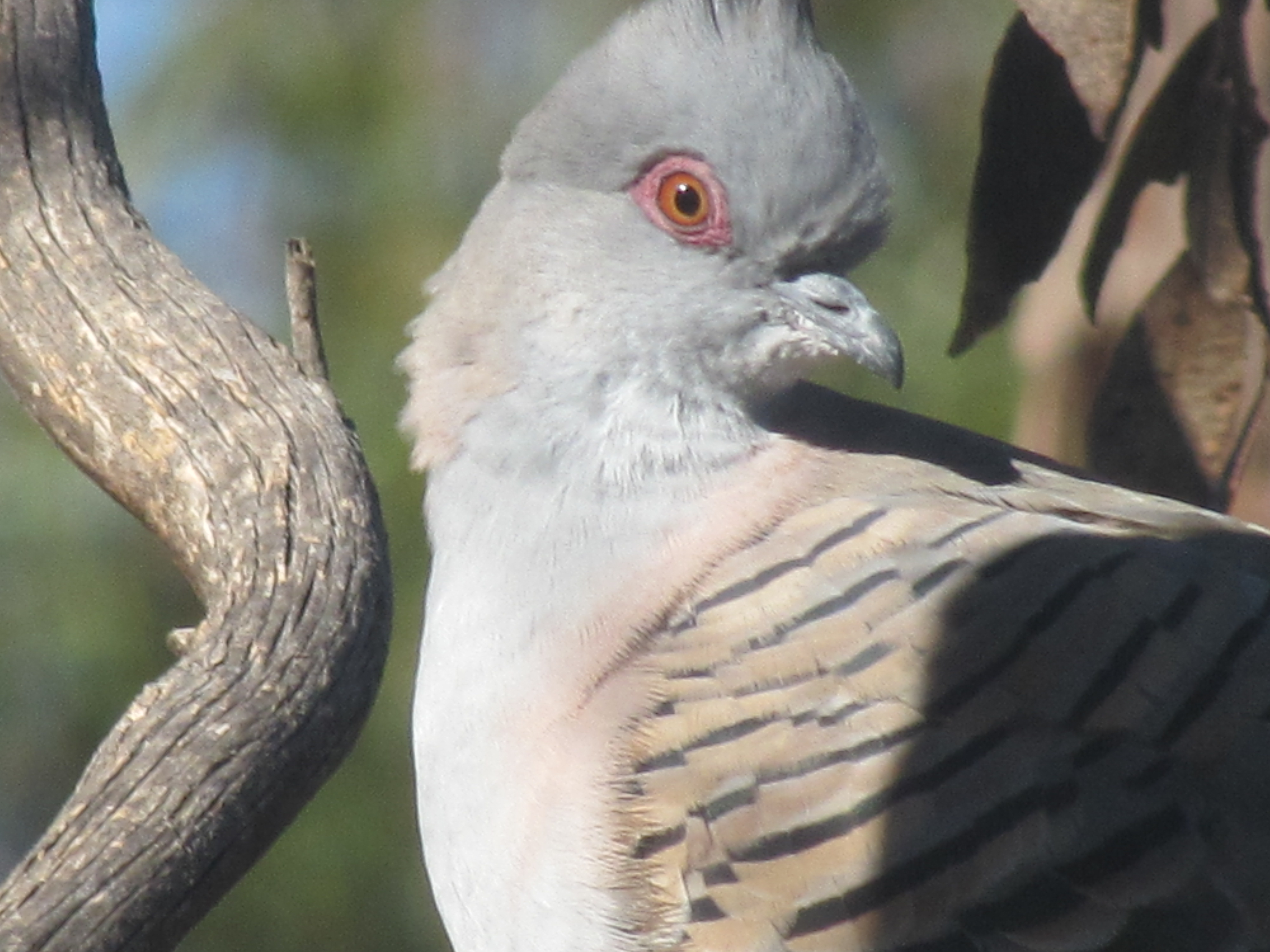
Crested Pigeon

Crested Pigeon
Crested Pigeon caught by surprise
Crested Pigeons are common birds in our garden and on our five acre block of land. They regularly come to visit the bird bath and have been breeding regularly over the years. We often see 15 to 20 or more sitting in a loose flock on the power lines bordering our property.
Yesterday, while hanging out the washing on the clothes line I observed one very surprised Crested Pigeon. He flew down from a nearby tree, under the clothes already on the line and landed not more than a metre from where I stood. For a brief second he paused, looked at me and then, a little startled, flew back to the tree again.

Crested Pigeon
I enjoy hanging out the washing. It gives me a break from the computer and gets me fresh air. It also gets me out where the birds are, and this I enjoy because over the years I have made some great observations while completing this task. The eyes are naturally looking up and I see things like eagles, kites, hawks, swallows, ibises and many other birds flying overhead. I live in hope of someday seeing some swifts in this way too.
Time for a bath: visitors to our bird bath

Brown-headed Honeyeater
Some years ago we set up a birdbath on our patio area. It gave us much pleasure to see birds coming to drink and bathe. More recently we moved it to the other side of the house. Now it is in full view from our sunroom. It is here we often eat our meals, and work at the table with the birdbath in full view.
Over recent years, this location has had four main benefits:
- It is a great time waster investment; watching the birds go about their daily lives just a few metres from where we are sitting is both relaxing and refreshing to the body, mind and spirit.
- It is most entertaining, especially when a bird like a Mallee Ringneck Parrot comes to bathe and the water sprays in all directions.
- It is excellent for photography; with the 12X zoom on my camera, I have taken many close-up shots of the birds visiting. (Update: my new camera has a 20x zoom. Further update: I now have a camera with an 83x zoom.)
- It is educational; our human visitors marvel at our avian visitors and this gives us the opportunity to further enhance our friends’ appreciation of the natural environment.
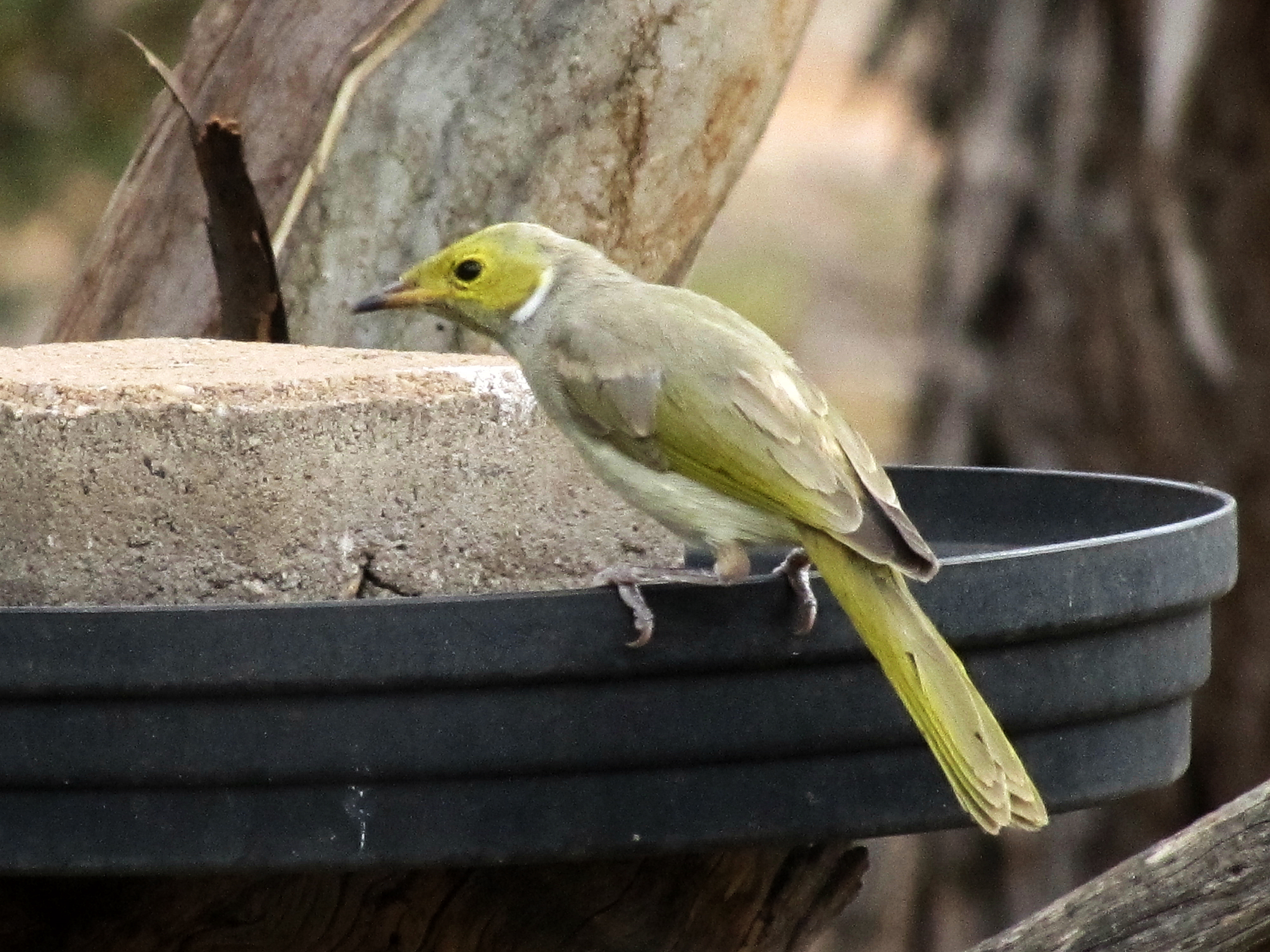
White-plumed Honeyeater
I’ve actually installed three different baths in close proximity to one another; one on the ground (which the lizards sometimes use too), one at a height of about 60cm and the third at about 1.5m. This gives them choices. The nearby branches and bushes give them a place of refuge if they feel threatened in any way.

House Sparrow (male)
A List of Species that have visited our bird baths:
- Mallee Ringneck Parrot
- New Holland Honeyeater
- Spiny-cheeked Honeyeater
- Red Wattlebird
- Brown-headed Honeyeater
- Singing Honeyeater
- White-plumed Honeyeater
- House Sparrow
- Common Starling
- Little Raven
- Willie Wagtail
- Spotted Turtledove
- Crested Pigeon
- Spotted Pardalote
- Striated Pardalote
- Diamond Firetail Finch
- Yellow-rumped Thornbill
- Grey Shrike-thrush
- Australian Magpie
- Magpie Lark
- Mistletoebird
- Common Blackbird
- Rufous Whistler (see updates below)
- European Goldfinch (see updates below)
- Chestnut-rumped Thornbill (see updates below)
- Grey Fantail (see updates below)
- Black-faced Cuckoo-shrike (see updates below)
- Galah (see updates below)
- Grey Currawong (see updates below)
- Eastern Rosella (see updates below)
- Sacred Kingfisher (see updates below)
- Dusky Woodswallow (see updates below)
- White-browed Babblers (see updates below)
- White-winged Chough (see updates below)
- White-browed Woodswallow (see updates below)
- Purple-crowned Lorikeet (see updates below)
- Animals
- Red Fox
- Stumpy-tailed Lizard
- European Rabbit
- Brown Snake
- Blue-tongue Lizard
That’s quite a list!
UPDATE: More recently we have added the following species to the list:
- Rufous Whistler
- European Goldfinch
- Chestnut-rumped Thornbill
UPDATE #2 Two more species to add to the list:
- Stumpy-tail Lizard (also called a Shingleback Lizard)
- Red Fox – yes, that’s right, a fox.
- Brown Snake – passed close to the bird bath on the ground. In January 2016 a metre long Brown Snake actually stopped to have a drink. See photos here.
UPDATE #3 Another species to add to the list: Grey Fantail – it came to the bird bath briefly but left before I could take a photograph (4th May, 2007)
UPDATE #4 In January 2008 we had a single Black-faced Cuckoo-shrike come to drink briefly from the bird bath.
UPDATE #5 In late January 2008 a single Galah came to within a metre of the bird bath but did not drink. A few weeks later I added Grey Currawong to the list.
UPDATE #6 In December 2008 I added European Rabbit to the list.
UPDATE #7 In December 2009 I added Eastern Rosella. (Click here for a photo)
UPDATE #8 In November 2013 a Sacred Kingfisher perched about a metre from the bird bath but did not drink. In February 2014 a Dusky Woodswallow came to drink during one of our heat waves during a very hot summer.
UPDATE #9 In September 2015 I added White-winged Chough, White-browed Babbler and Blue-tongue Lizard (click for photo)
UPDATE #10 In December 2015, during a heatwave, I added White-browed Woodswallow.
UPDATE #11 In December 2020 I added Purple-crowned Lorikeet.
Comments: many of my readers have commented on this post – read them below and leave one of your own.
Update: this post was last updated on December 2020.

Mallee Ringneck Parrot

Mallee Ringneck Parrot

Mallee Ringneck Parrot
Anyone for a swim? Forget it baby Blackbird
I had been planning on cleaning our swimming pool for some time, but other jobs kept getting in the way. The weather has been warming up quite suddenly in recent weeks here in Murray Bridge, South Australia. After a very cold winter with many frosts the warmer air is quite a pleasant change.
And so it is that our thoughts turn to swimming. We have a small in-ground swimming pool in our garden. It is a lovely spot to relax in or around after a hot summer’s day. The exercise is also very good for us. Over the winter months it has become somewhat neglected, to the point where it would be more aptly called “Le Swamp.” It’s green – very green and murky. Not good for swimming. Even the local ducks are now shunning it, though one did pay a visit yesterday.
Now to clean the pool I have to vacuum all the rubbish off the bottom; things like leaves and sticks blown in from nearby trees during winter storms. I use a flexible blue rubber hose attached to the pump which vacuums (or rather sucks) the debris off the floor of the pool.
Good theory.
I have a problem.
I can’t use the hose; someone has used it to make it their home. A Blackbird couple have moved into the pool pump shed and made a nest on top of the hose where I hang it up between uses. Now the nest has babies. And so I cannot begin to prepare the pool for swimming. It doesn’t matter; the forecast for next week is for quite cool weather.
Related Articles:
- Common Blackbirds – information about Balckbirds with many comments from my readers about their experiences with this species.
- Do Blackbirds Swoop? – How to deal with aggressive bird behaviour. Again there are many comments from my readers. This is currently my most popular article.

Common Blackbird nest
Babies, the Birds and the Bees

New Holland Honeyeater in nest
It must be spring here in Murray Bridge, South Australia. So many baby birds all around us, including the baby New Holland Honeyeater in the photo above – just about to leave the nest. This one did leave the nest a few hours after this photo was taken and its sibling just a short time before the photo. At lunch time today we saw another New Holland Honeyeater making a new nest only a few metres away from this one.
The New Holland Honeyeaters are not the only ones breeding. Here is a list of birds I have observed nesting, feeding young in the nest or feeding newly fledged young in the last few weeks. It only includes birds observed in our garden, on our five acre block of land or on the roads bordering our property (on two sides).
Breeding Birds September – October 2006
- White Winged Choughs – feeding young.
- Little Raven – feeding young.
- Red Wattlebird – feeding young in nest.
- Australian Magpie – feeding young.
- Yellow Rumped Thornbill – feeding young in nest.
- House Sparrow – feeding young.
- Common Starling – feeding young.
- Common Blackbird – eggs in nest fell out (when the plant pot it was in fell over).
- Spotted Turtledove – mating behaviour but nest not found.
- Crested Pigeon – mating behaviour but nest not found. [Update: I found the nest a day after posting this article]
- Grey Shrike Thrush – feeding young.
- White Plumed Honeyeater – feeding young.
Noteable Exception:
- Willie Wagtail – usually nest quite near the house but not observed nesting this year. This is noteworthy as it is probably the first time in over twenty years. It’s not too late, of course.
And the Bees??
The bees in the title of this article refer to several hives of bees – possibly feral bees – that have taken up residence in tree hollows. This prevents the native birds ever using that hollow again. We are trying to deal with the one nearest the house; two others are a little high in the trees to tackle.
Related articles: