Collared Dove, Rabat, Morocco
No Comments »5th February, 2013; Category: Bird Behaviour, Garden birds, Non-Australian birds, Photos, Pigeons and Doves
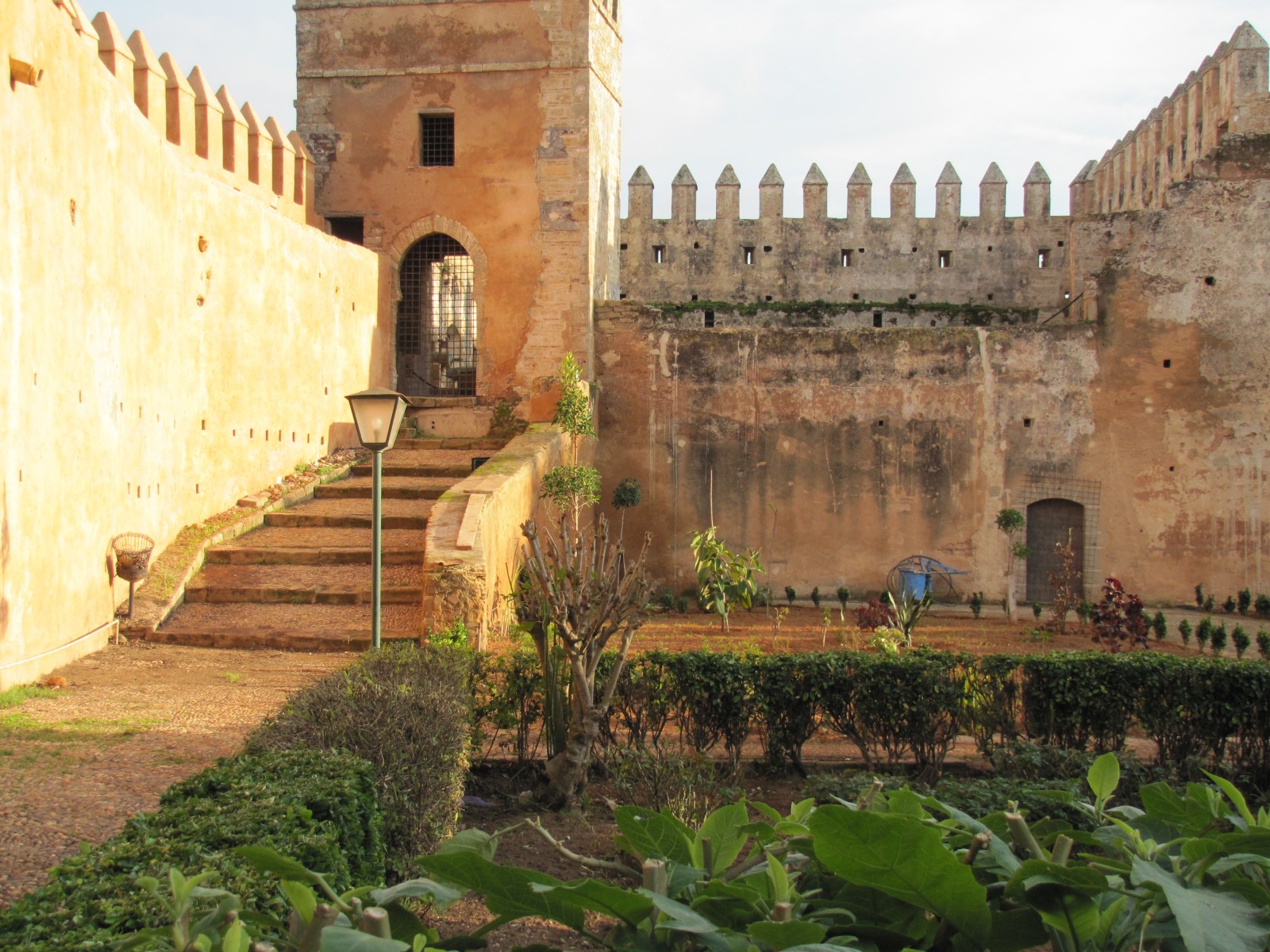
Beautiful walled garden in Rabat, Morocco
On our guided tour of Rabat in Morocco we walked through the interesting walled quarter known as the Kasbah des Oudaias. A part of this quarter was this beautiful garden. In the garden I managed a few hurried photos of a Collared Dove, shown below.
I use the expression “hurried photos” deliberately. The bird was moving around constantly, not stopping for more a a second or two in any one spot, making focussing something of a challenge, even though the bird was quite close. The bird won.
Still, it was nice to add another species to my list of Moroccan birds.
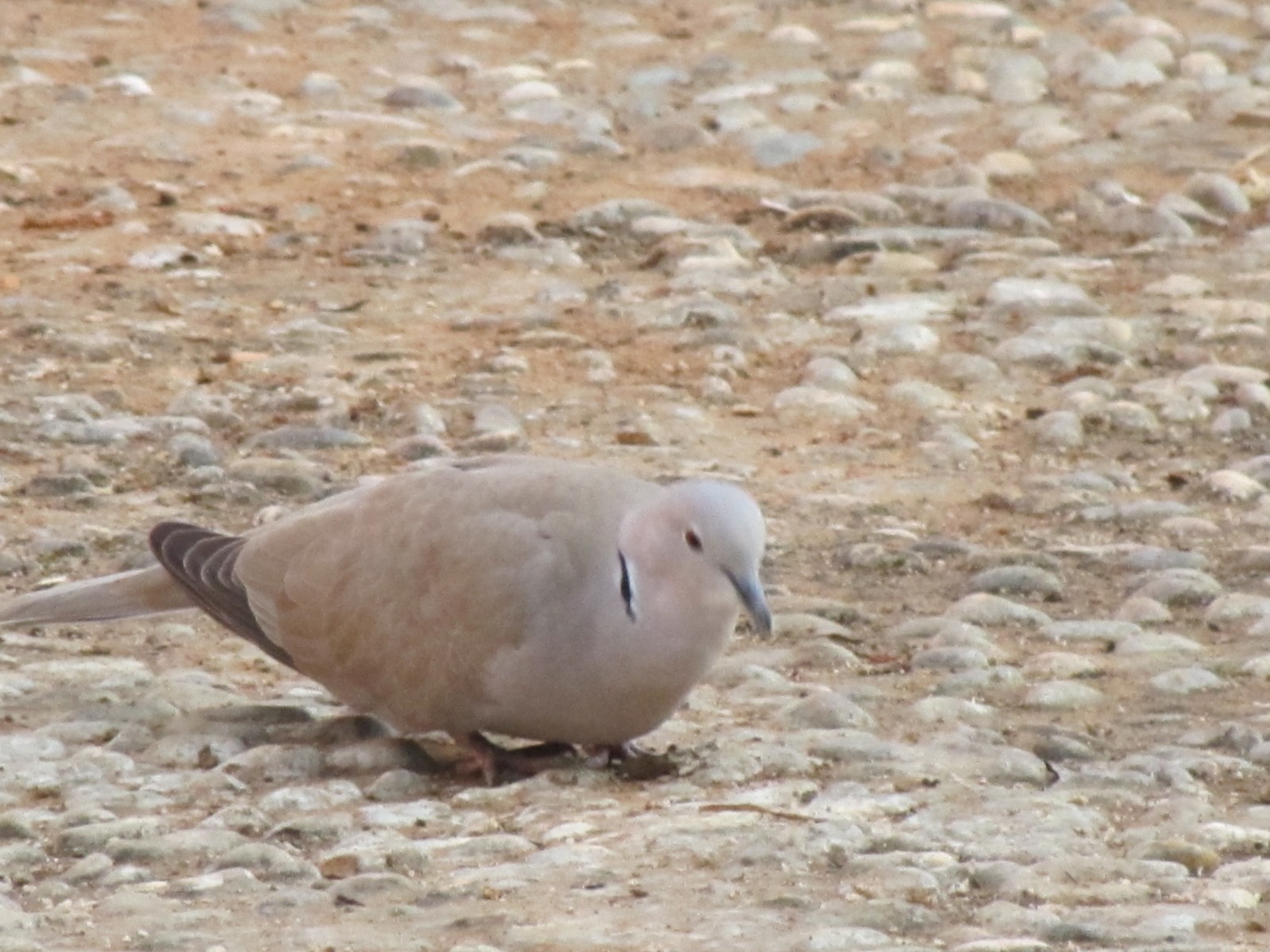
Collared Dove, Rabat, Morocco
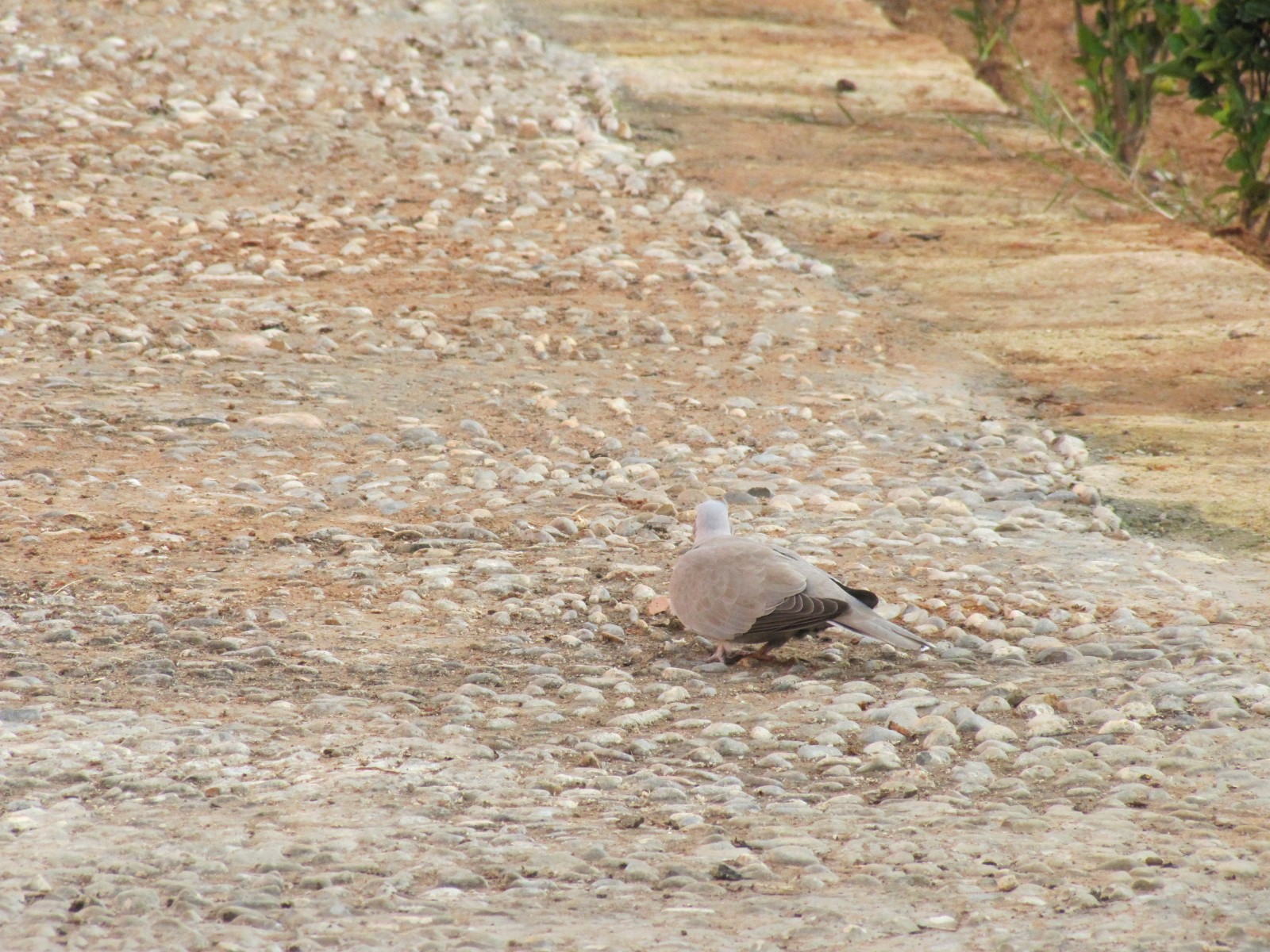
Collared Dove, Rabat, Morocco
Little Thornbills take a bath
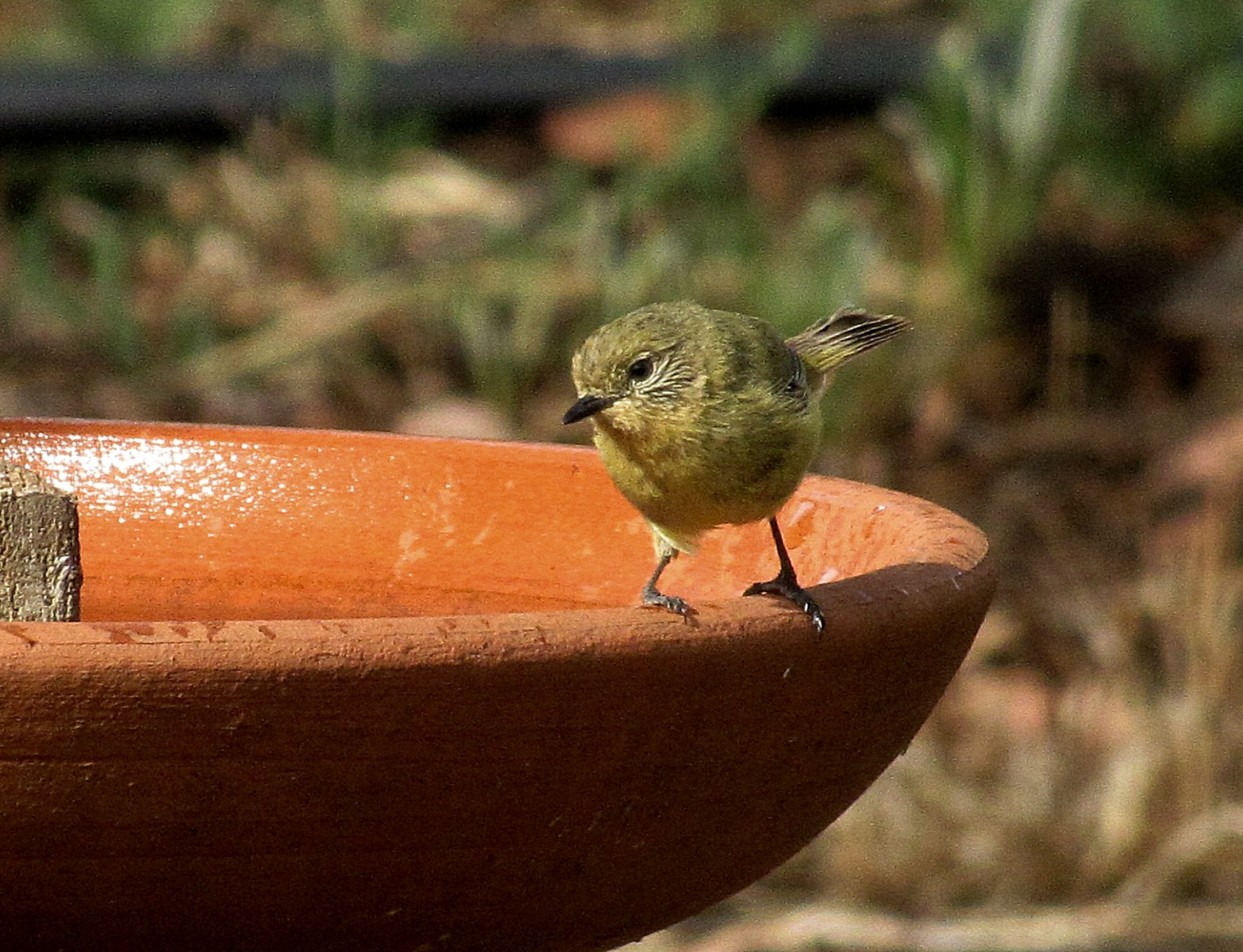
Little Thornbill (also called Yellow Thornbill)
We have many different birds resident or visiting in our garden and adjacent mallee scrub. We have quite a few thornbills, species which are always a challenge to identify. Many of them are little brown birds which move quickly and are hard to hold in focus for long with binoculars. Most are even harder to focus on with a camera.
I have over the years managed reasonable photos of the common Yellow-rumped Thornbill. I have fewer good photos of the occasional visiting Chestnut-rumped Thornbills. And until earlier this week I had no photos of the elusive Little Thornbill which is also called the Yellow Thornbill. This species is commonly heard and seen in our garden and nearby, but never have I managed to capture one with my camera.
Earlier this week a loose flock of about 6 of this lovely species came to one of our bird baths. they flitted in and out of the water, zipping to branches high above to preen before diving down to the water ago. I had to be very patient with my camera, making sure it was focussed on the edge of the bird bath in anticipation before snapping them. I was pleased to manage three reasonable shots.
Further reading:

Little Thornbill (also called Yellow Thornbill)
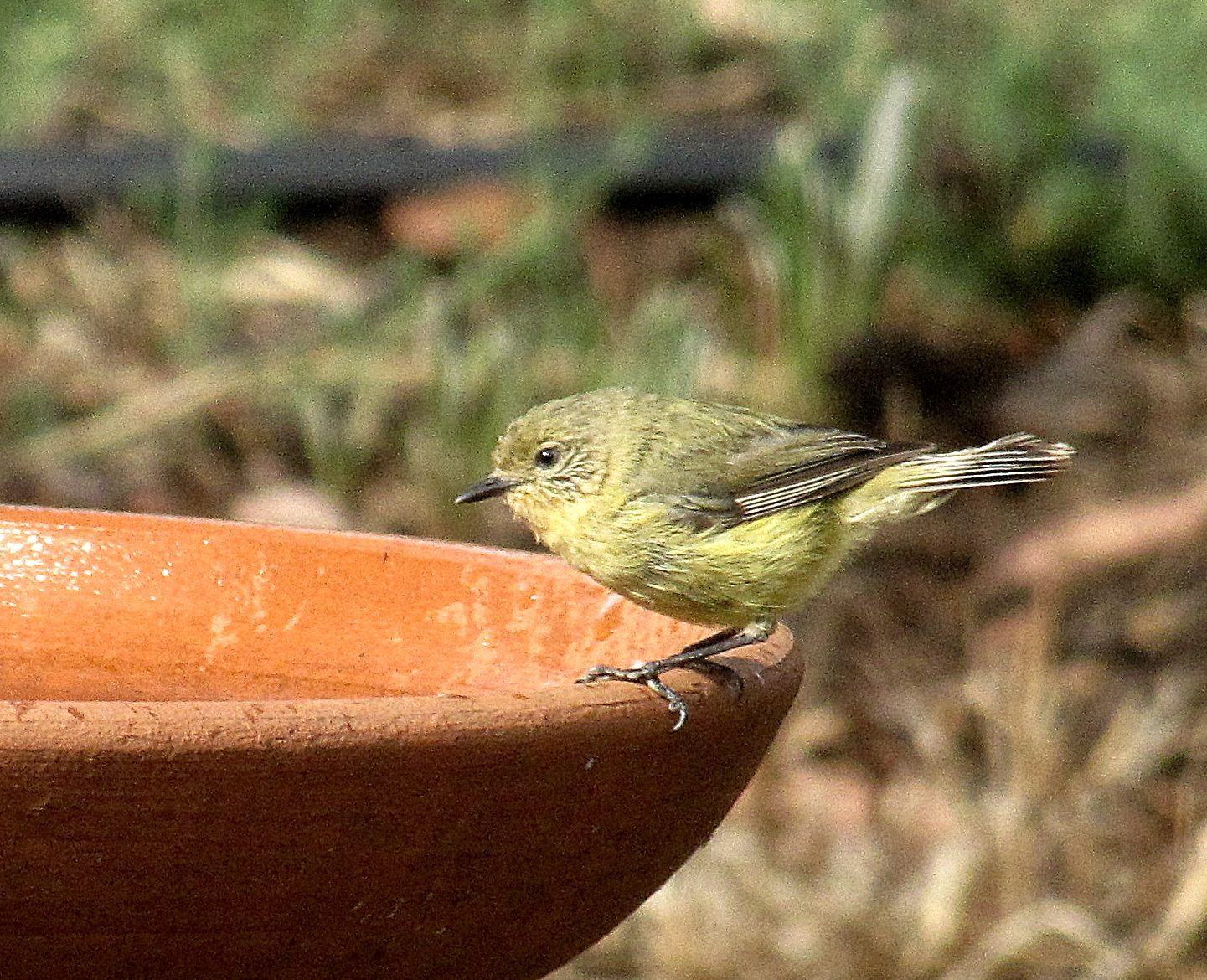
Little Thornbill (also called Yellow Thornbill)
Superb Fairy-wrens take a bath
We used to have a few wrens in our garden from time to time, mainly in the late 1980s and early 1990s. On all occasions they were Variegated Fairy-wrens, which is not the dominant wren species of the region.
About a year ago on our return from six weeks’ holiday overseas, we were greeted by two Superb Fairy-wrens, a male and a female, who had taken up residence in our absence. (Read about that here.) We have seen them almost every day since – except for the last month. Suddenly they have reappeared, this time with a third, uncoloured, bird. It is entirely possible that they have nested nearby without telling us, or giving away the location of their nest.
All three birds took delight in having a good splash in one of our bird baths yesterday while I was finishing my breakfast and trying to complete the crossword in the paper. Sadly, I wasn’t quick enough with the camera, so I’ll use a photo taken elsewhere on another occasion.

Superb Fairy-wren, male (r) and female, near Mannum, South Australia
Never assume anything about birds

Common Bronzewing pigeon, Mallacoota, eastern Victoria
Of the many things I’ve learned about birds over the years, one principle stands out: never assume anything.
I was out in the garden searching out several birds making a noise near the house. I didn’t get much of a look at them but by their call and the quick look I had of one of them I think they were Yellow (Little) Thornbills.
As they flew off my attention was drawn to a solitary bird perched high in a dead branch of a nearby tree. “Spotted Turtledove” I immediately thought, as they are a common breeding species in our garden. I lifted my binoculars and was delighted to see that the bird in question was actually a Common Bronzewing Pigeon.
This was a good sighting, for although they are a common species in our district, they tend to prefer less populated, thicker scrubby areas. On checking my bird database I found that this was only the 5th record of this species on our block of land. My records go back 28 years, so I was quite pleased I saw this individual.
And to think I’d almost not given it another look.
Birds in the heat
No Comments »8th January, 2013; Category: Bird baths, Bird Behaviour, Garden birds, Magpies and Currawongs

Close up view of a Magpie Lark
Southern Australia is experiencing a series of very hot days since Christmas. Here in Murray Bridge, South Australia, we have experienced most days over the temperature of 35C (95F) with several days getting as high as 45C (113F). It’s been hot, very hot. On days like that I appreciate the fact that I don’t have to go out to work in the sun. I can hunker down inside, get on with my reading or writing with the air conditioning drifting cool air throughout the house.
Not so for our bird life. Many of our wonderful garden birds really suffer during such hot spells. I keep our various bird baths topped up with clean fresh water, and there is a constant stream of birds visiting for a drink, and often for a splash. The Magpie Larks (see photo above) are really keen to come to the bird bath in our front garden. We have a good view of this spot from our sun room which also doubles as a bird hide suitable for photography as well.
The Magpie Larks don’t have the water all to themselves. The local resident Australian Magpies also love to come for a drink and to bathe. The magpies can be very bossy, too. They like to either stand in the water – or sit in the water, often for an hour or more at a time. No sharing, just exclusive occupation.
Perhaps I need to set up a booking system.